© Please note: this instrument may be protected by copyright; its reproduction may be restricted or prohibited. Please see our copyright rules.
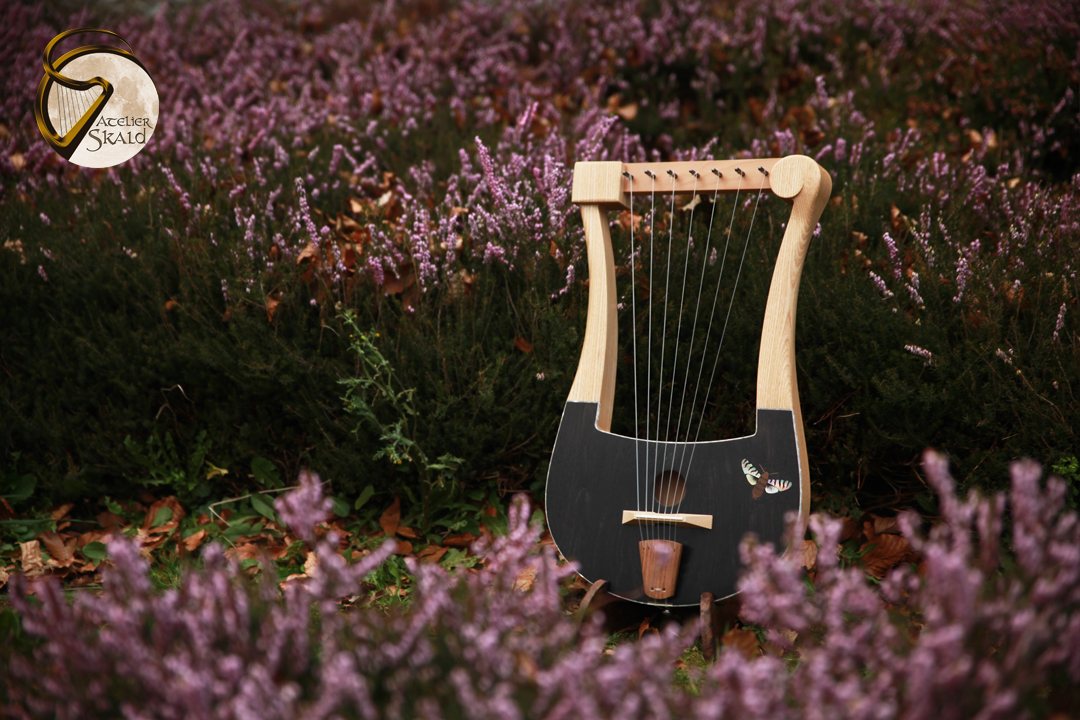
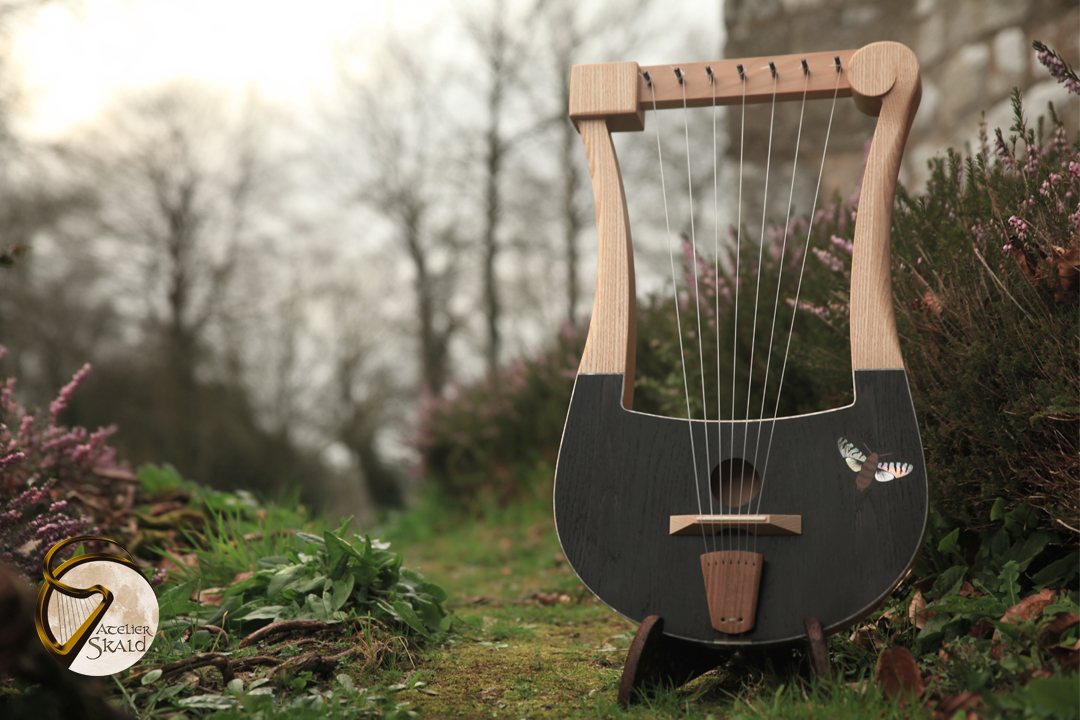
Gallic lyreMorosphynx
Adapted historical instrument
Made after an archaeological find, with the adaptations requested by the musician.
Model: Gallic lyre of Paule (Late Iron Age)
Collection: Animal Spirit
Specifications
- Body
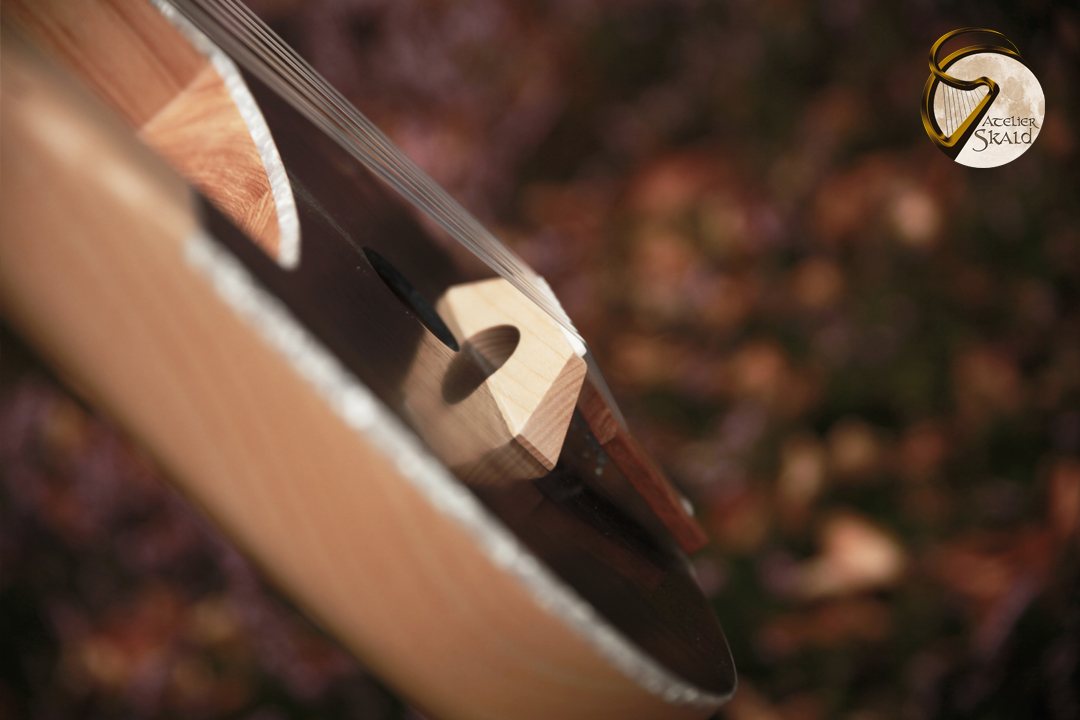
- Ash
- Soundboard
- 2,000-year-old bog oak
- Yoke
- Wild cherry
- Tuning pegs
- Metal
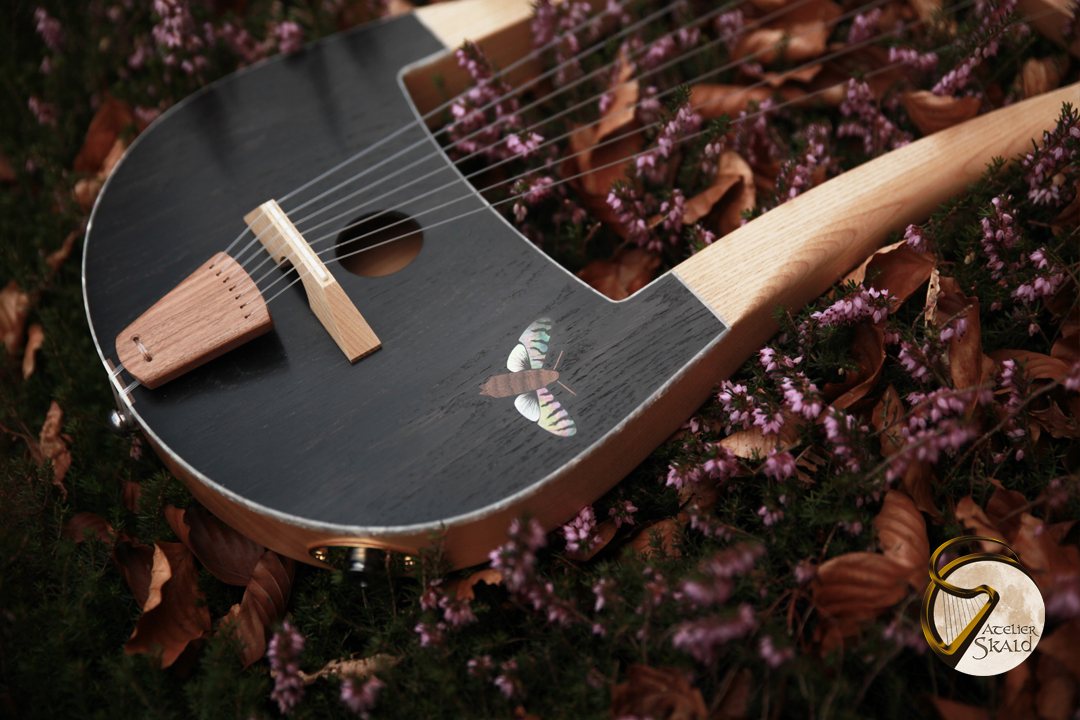
- Tailpiece
- Walnut
- Bridge
- Olive ash
- Strings
- Nylon
- Finish
- Natural
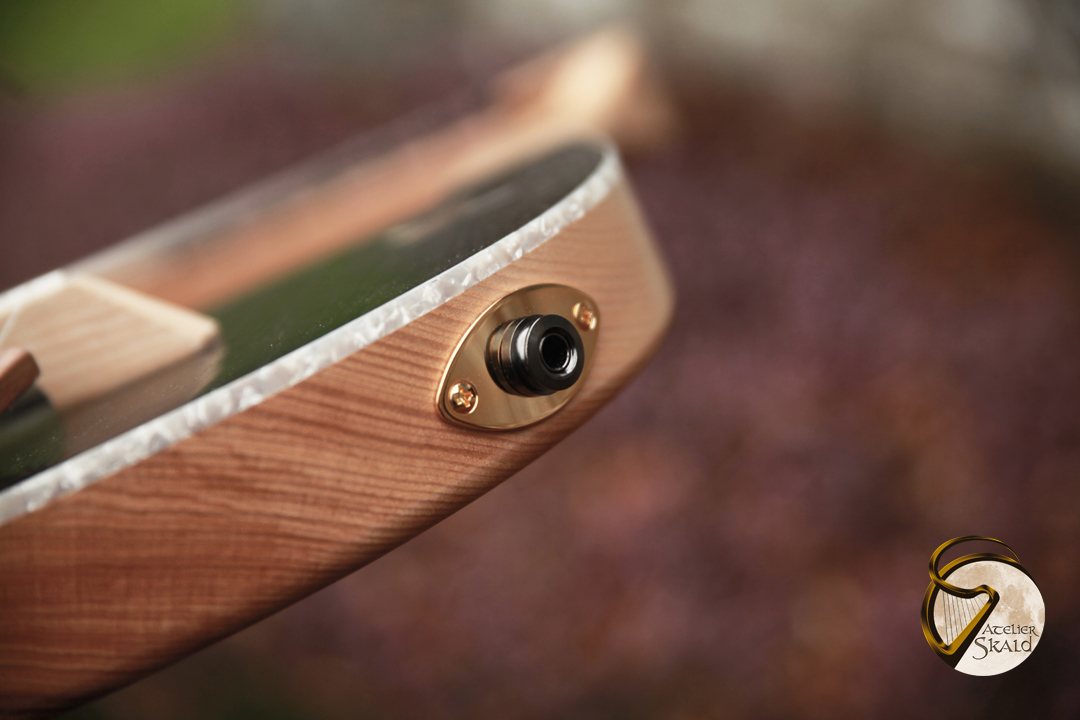
- Pickup
- Active pickup, jack output
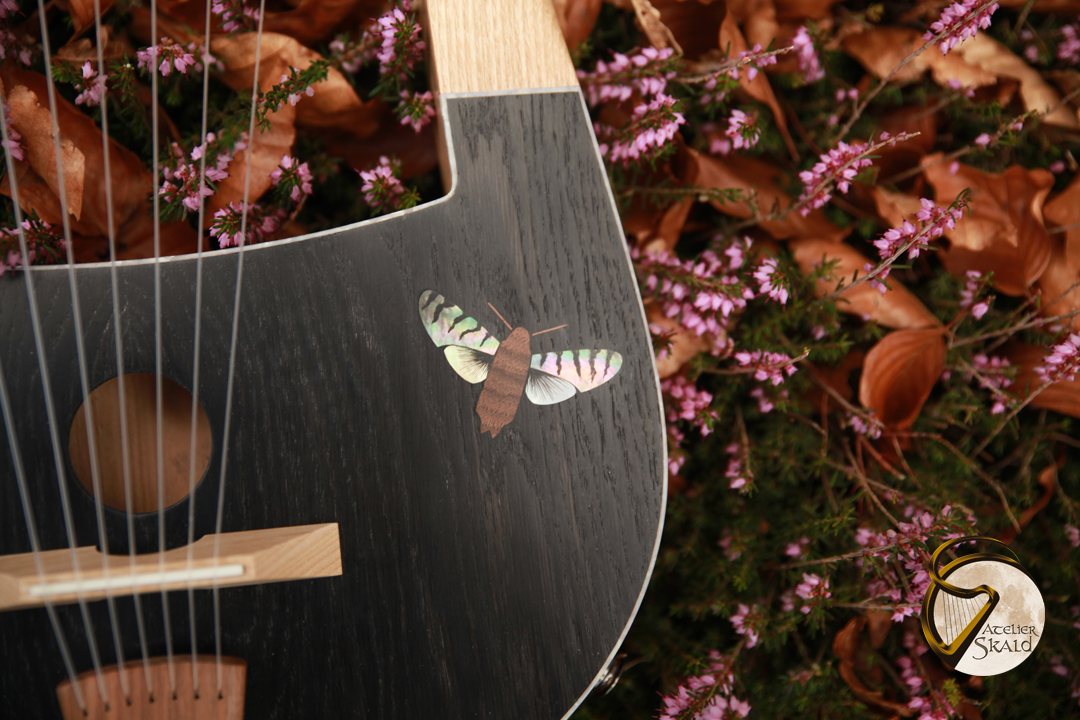
- Ornamentation
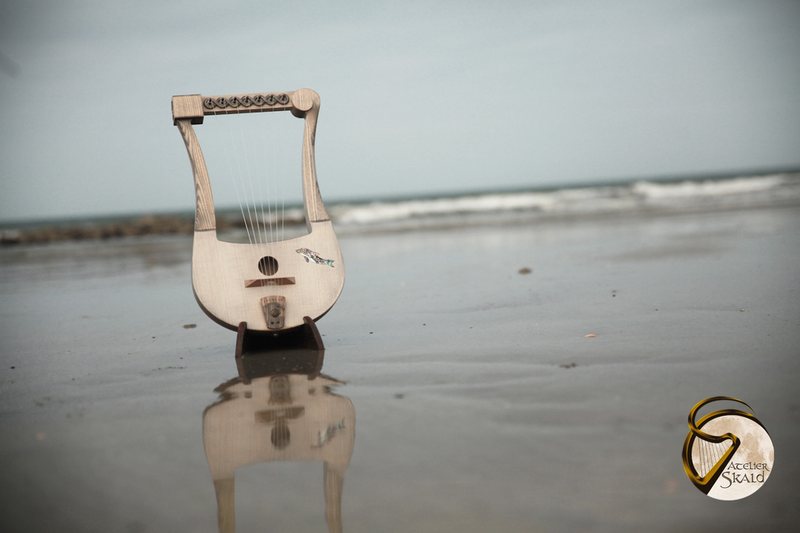
- Hummingbird hawk-moth marquetry, mother-of-pearl soundboard purfling
Every instrument is made to order: woods, ornaments, strings and pickup are adapted to the way you play.
History and origins
Gallic lyre of Paule · Late Iron Age
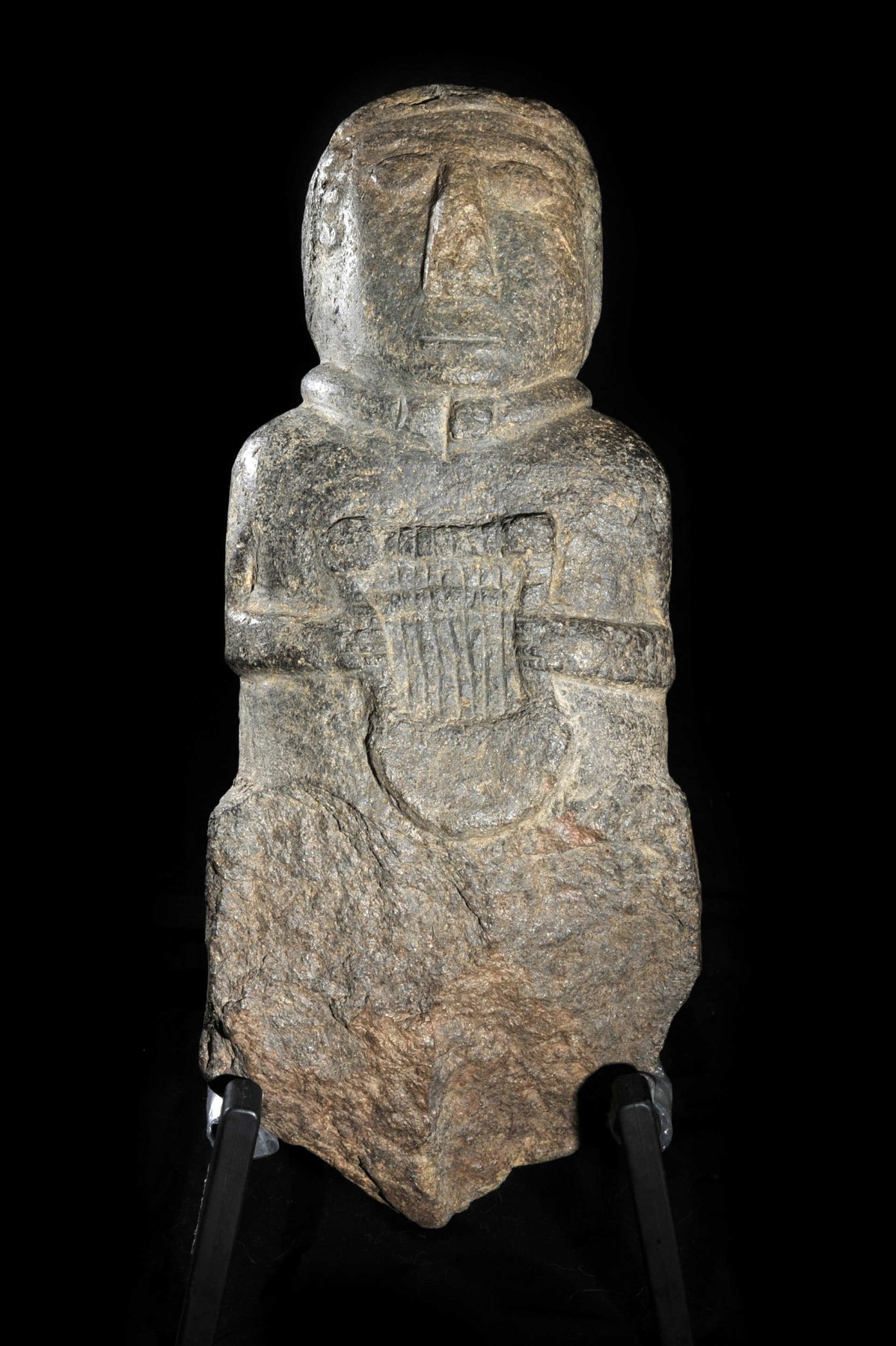
Found at Paule, in the Côtes-d'Armor, the bust of the Bard with the lyre shows a figure wearing a torc and holding a lyre. It is the most precise depiction of a Gallic lyre ever found, and one of the oldest depictions of a stringed instrument in France.
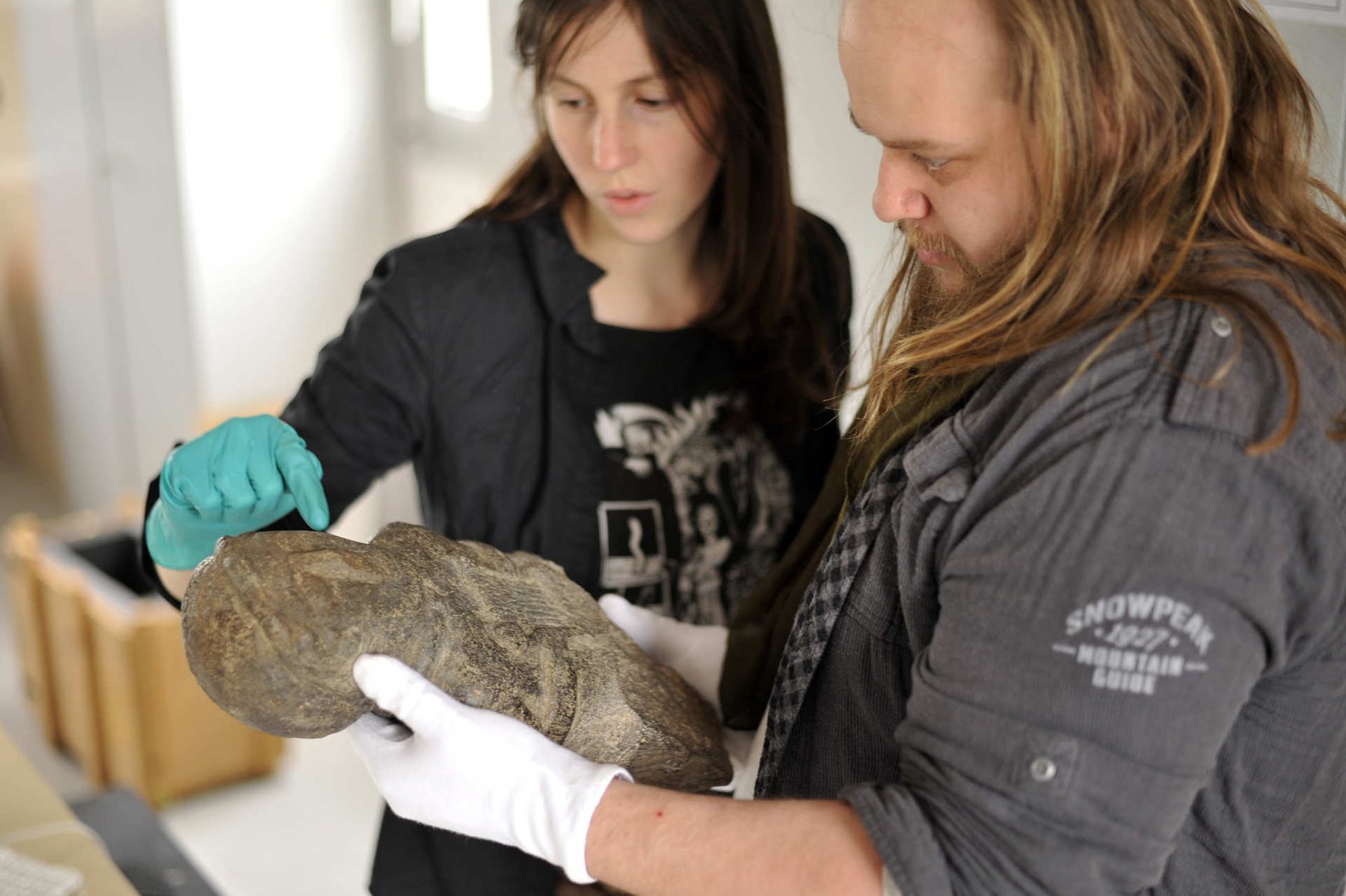
In 2018, the PRIAE team, which we lead, carried out the 3D scanning of the bust with the Regional Archaeology Service of Brittany. The precision of this survey brought new data on the instrument.
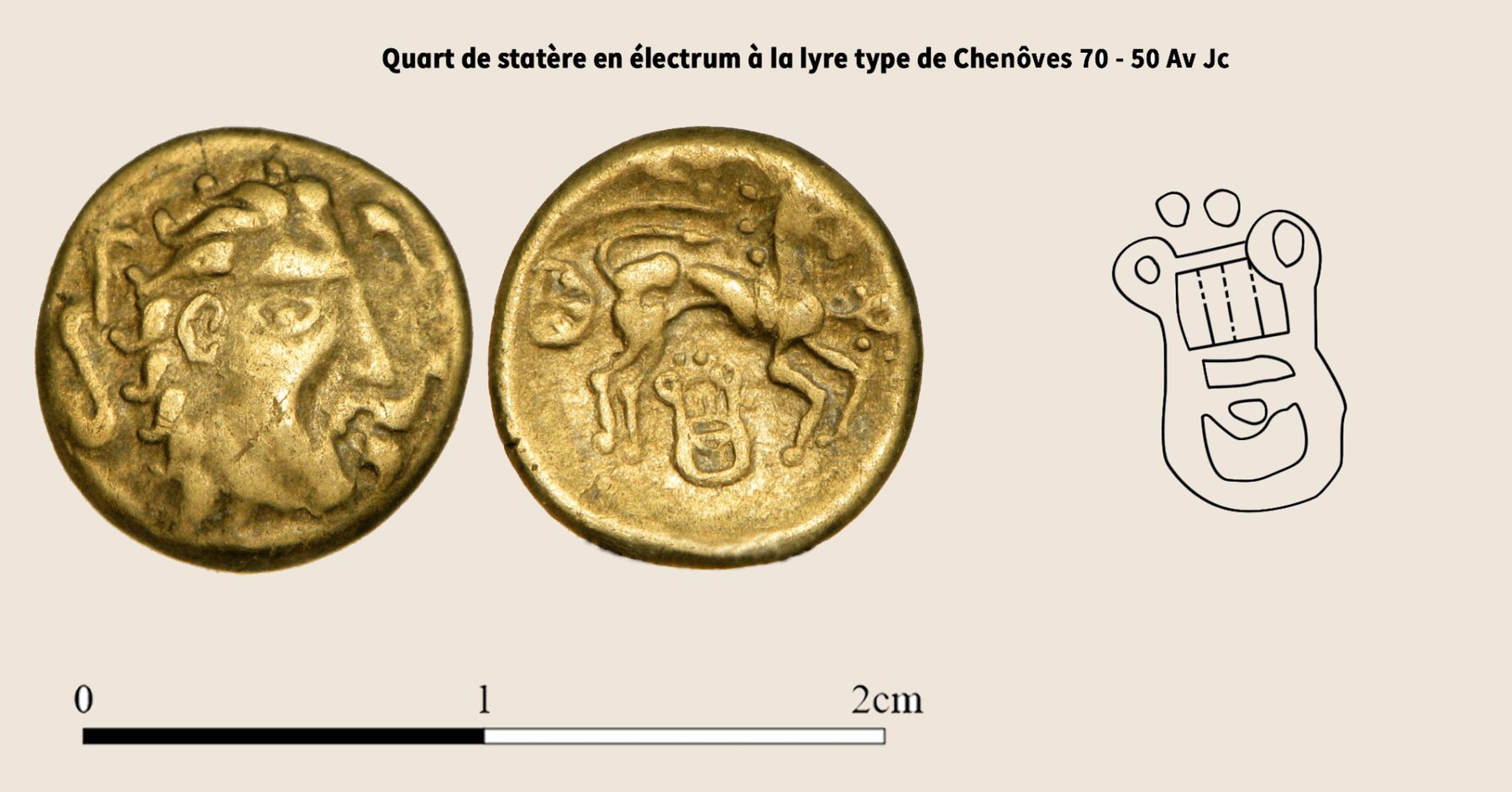
Depictions of the lyre are rare in Gaul, and often stylised. We have gathered a corpus of images, in particular Gallic coins, on which the lyre often appears. Greek and Latin authors also mention the bards, who sang to the lyre.
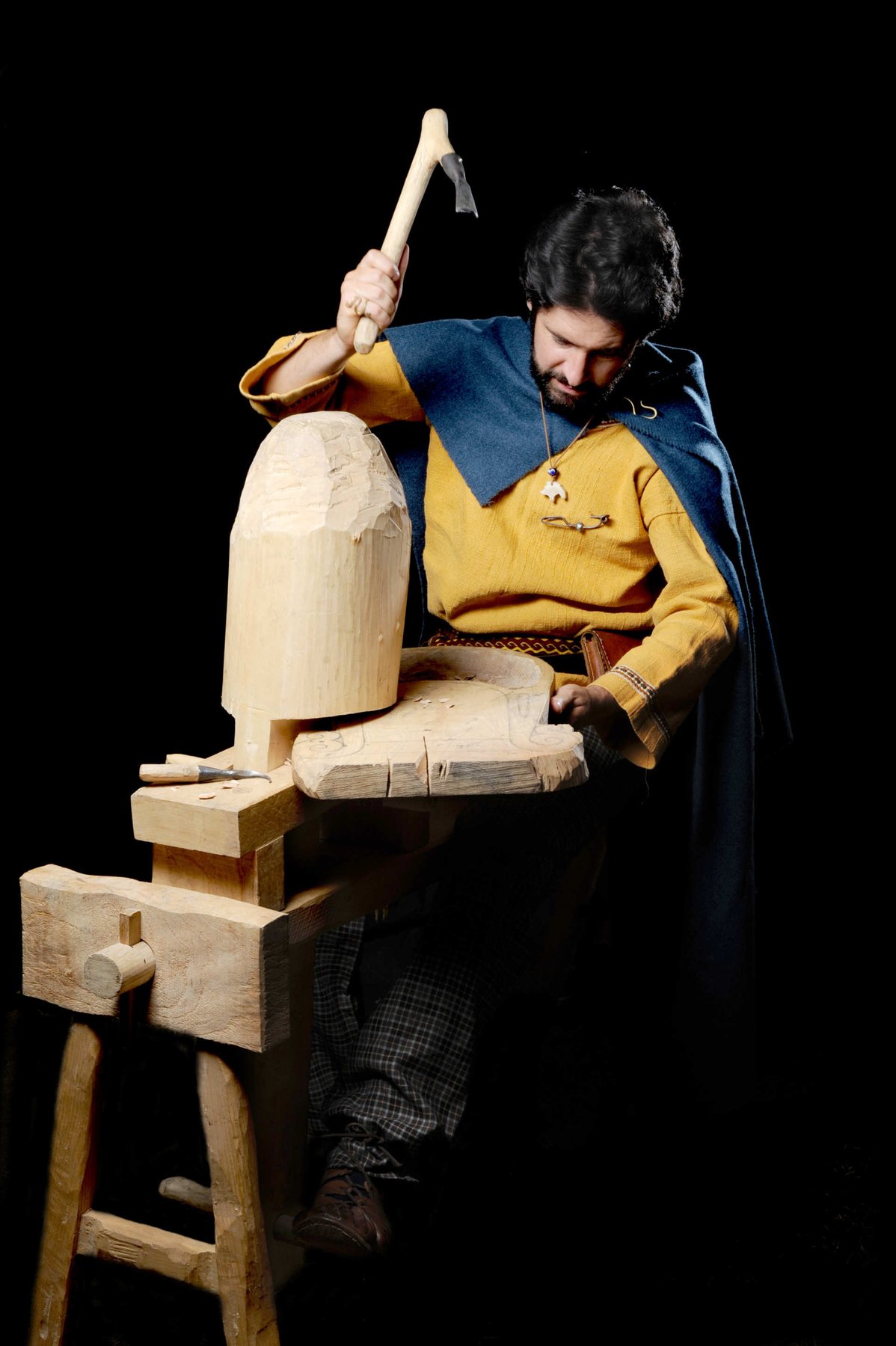
Materials identified through palynology, Iron Age tools reforged, gestures recovered through experiment: each trial guides our choices and brings our instruments closer to historical reality.