© Please note: this instrument may be protected by copyright; its reproduction may be restricted or prohibited. Please see our copyright rules.
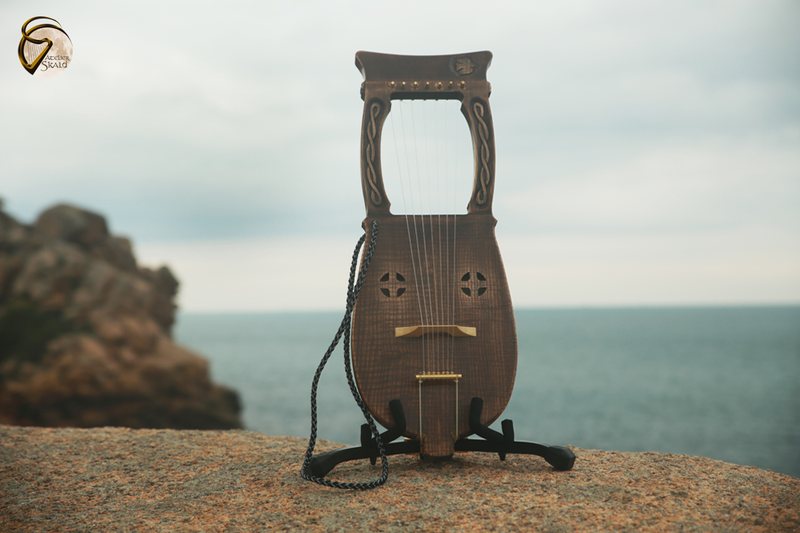
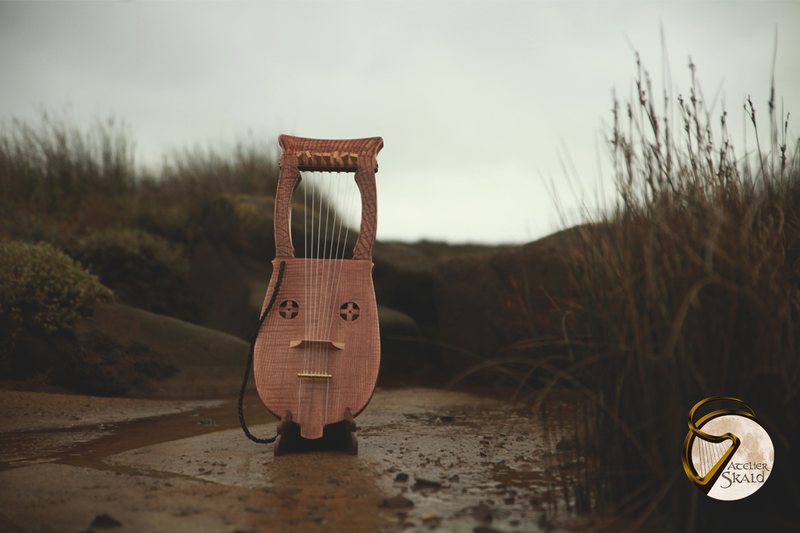
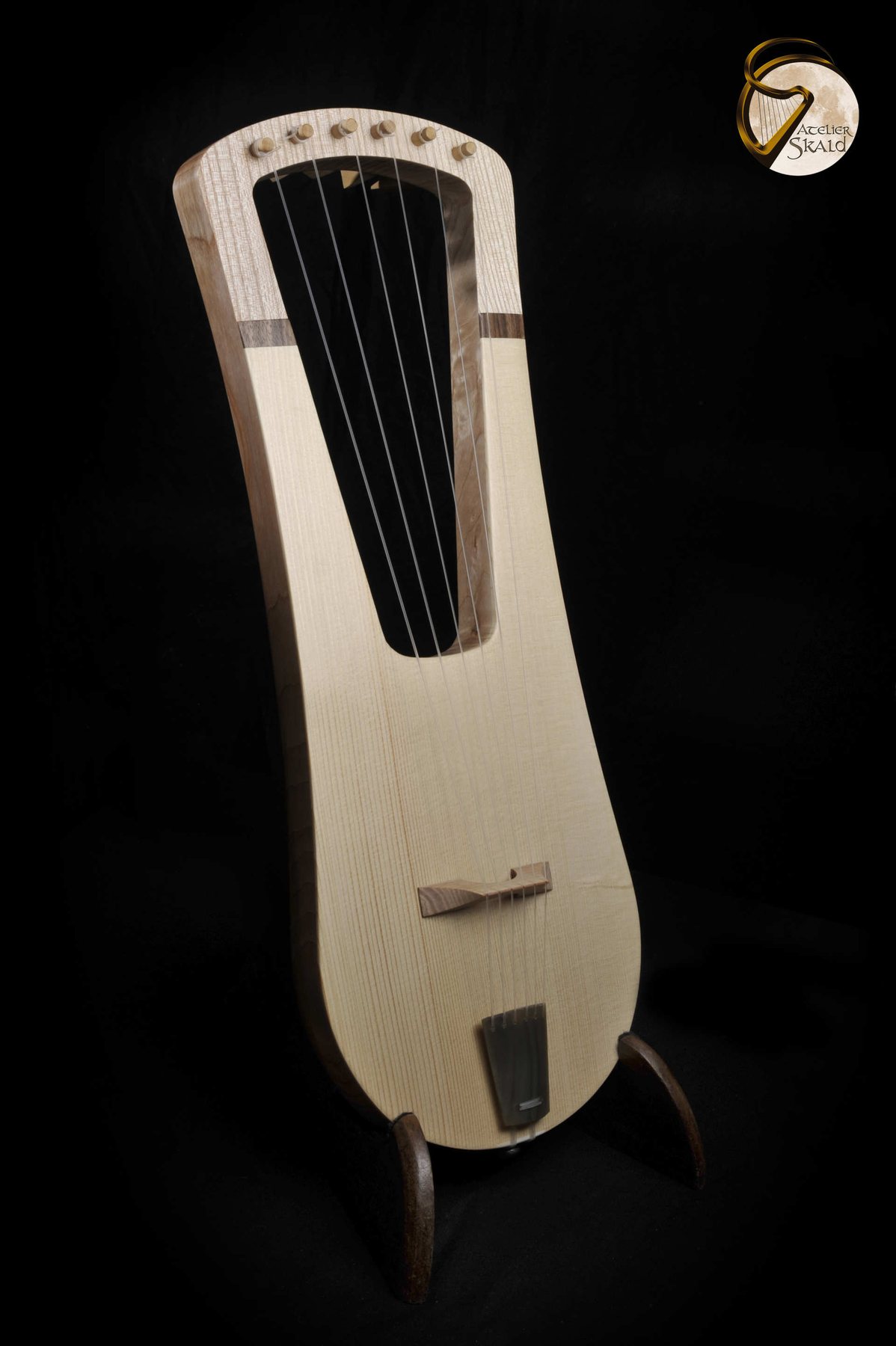
Frankish lyre of Cologne
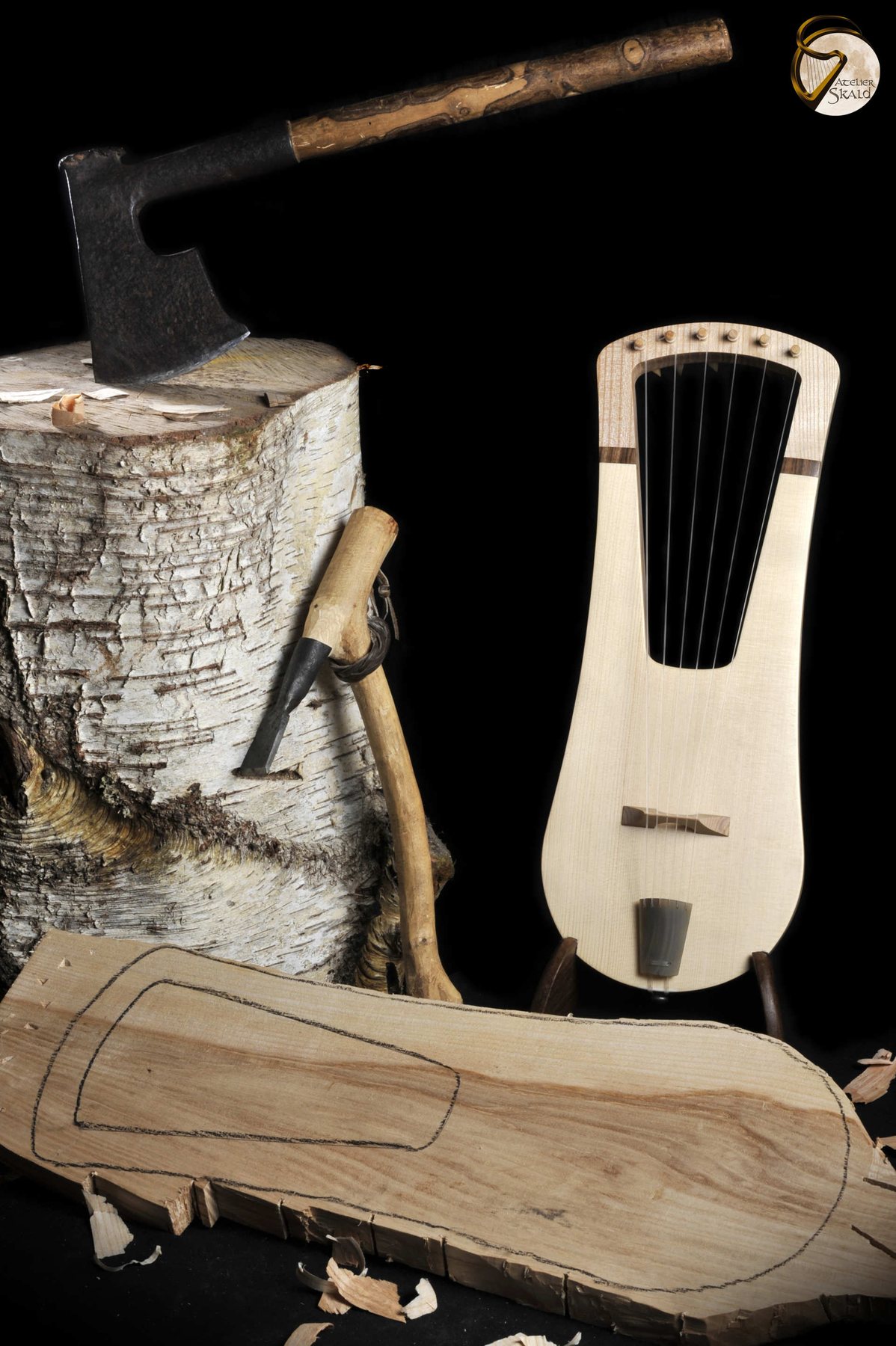
Historical instrument
Reconstructed with the means, techniques and materials of its time.
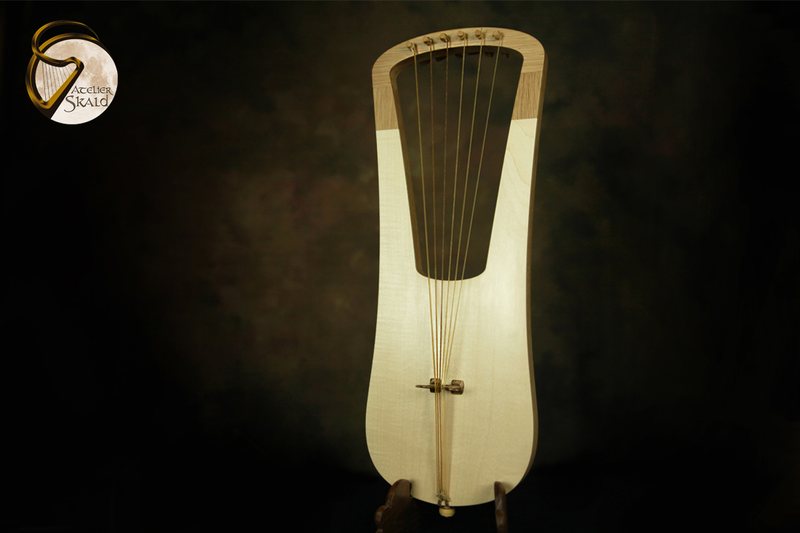
Model: Cologne lyre (7th century)
Specifications
- Body
- Ash
- Soundboard
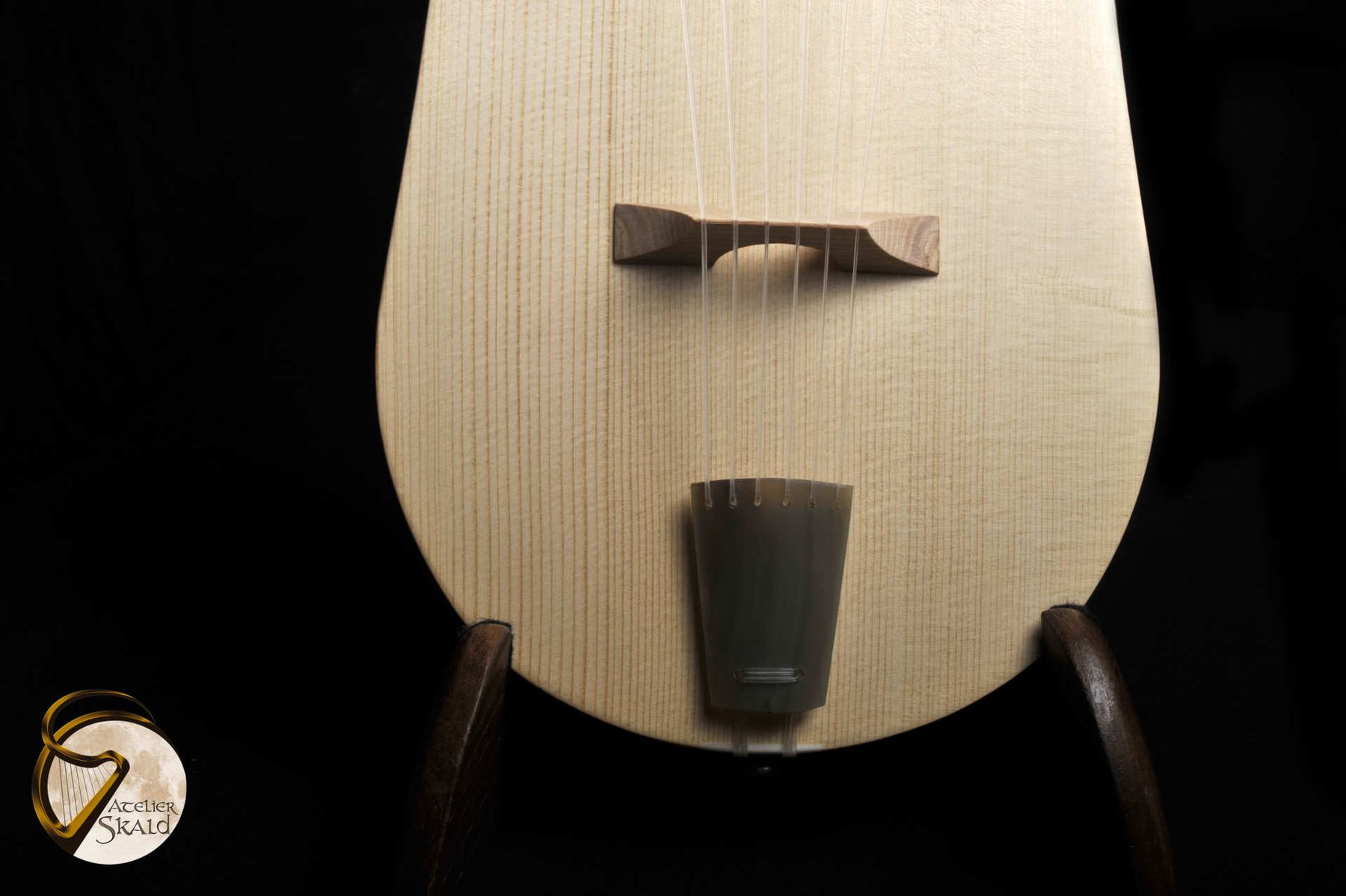
- Spruce
- Tuning pegs
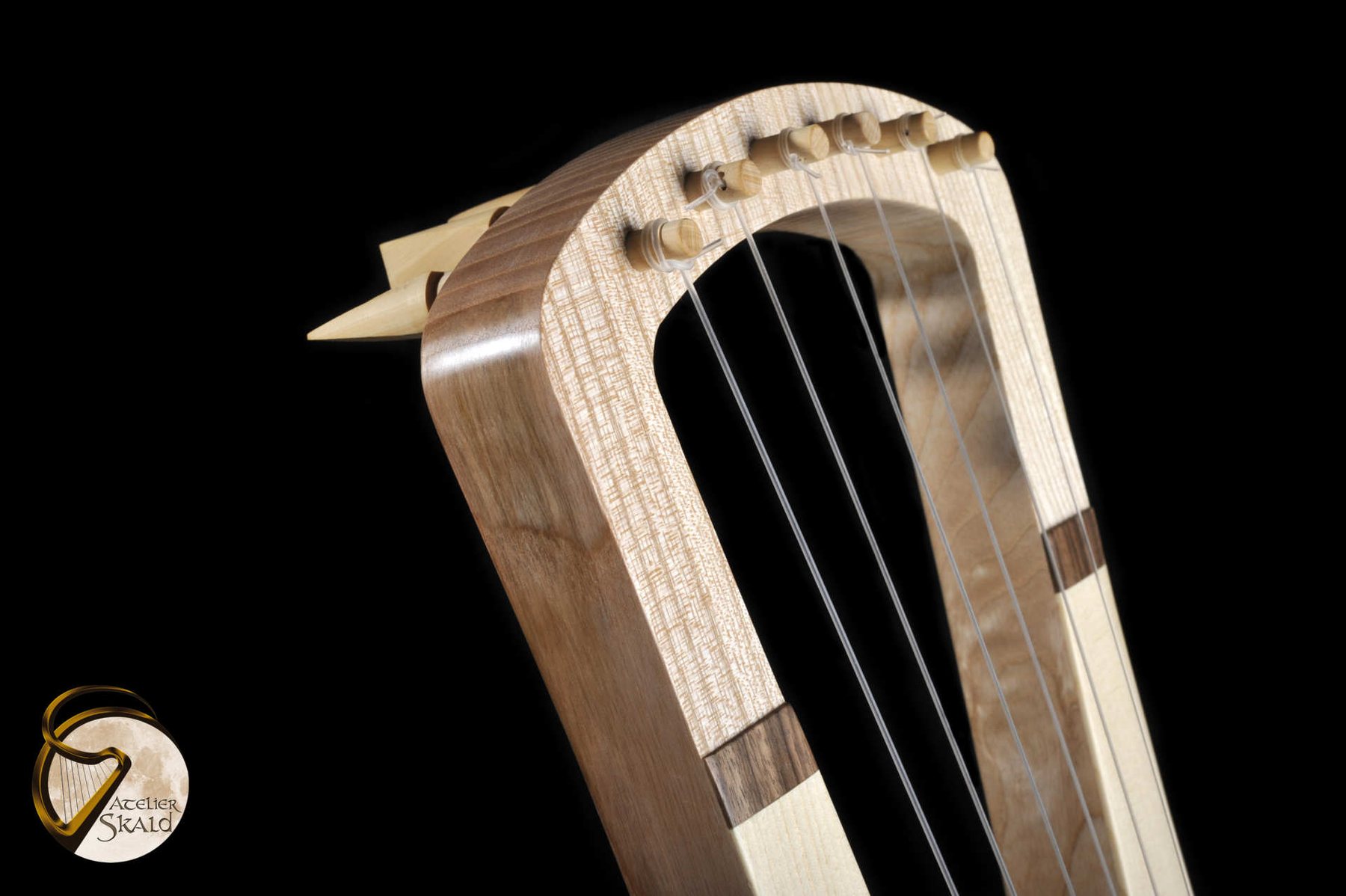
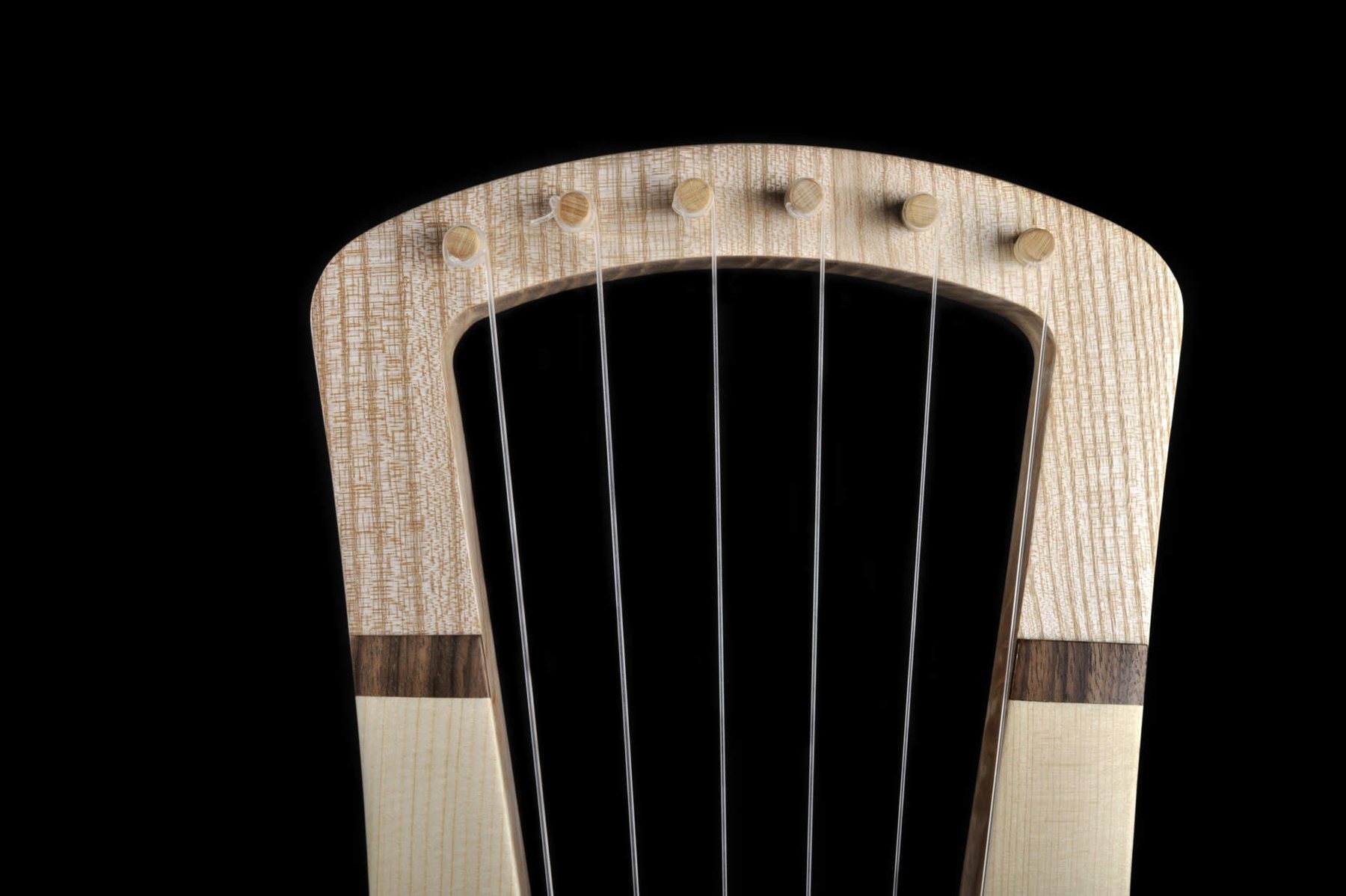
- Turned boxwood
- Tailpiece
- Polished horn
- Bridge
- Olive ash
- Strings
- Nylon or gut
- Ornamentation
- Walnut plate at the top of the soundboard
- Accessories
- Tuning key made of roe deer antler
Every instrument is made to order: woods, ornaments, strings and pickup are adapted to the way you play.
History and origins
Cologne lyre · 7th century
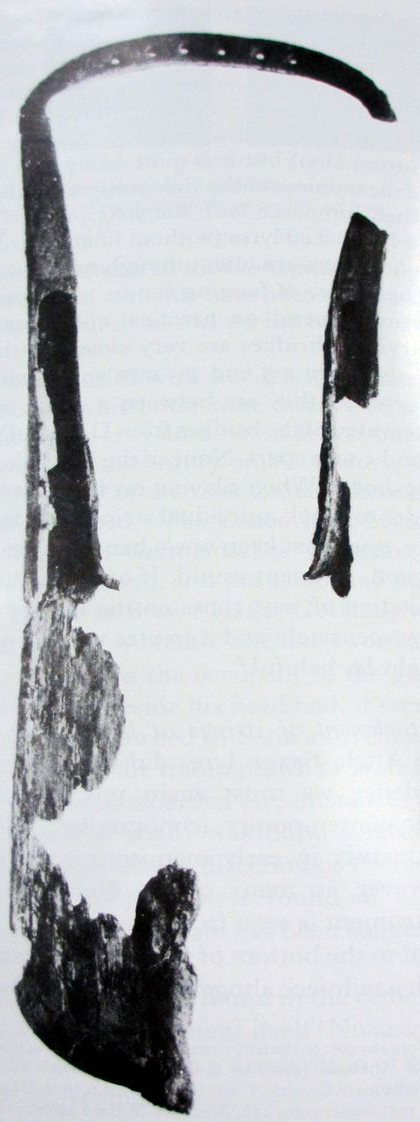
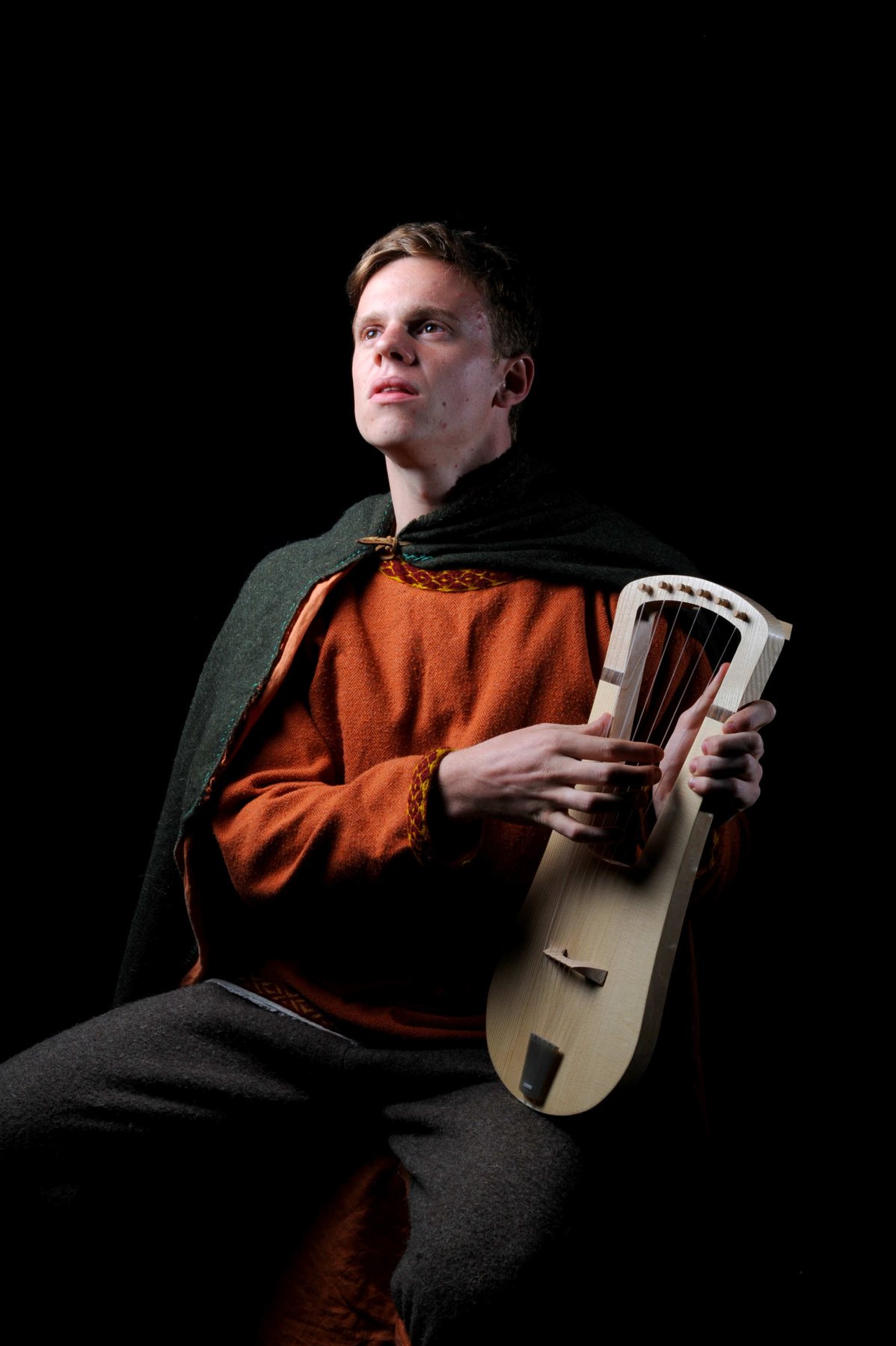
The remains of this lyre were found in the church of St Severin in Cologne. Wood analysis showed that it was made of maple. The six holes in the yoke, which held six pegs, suggest that it was both plucked and strummed, like the lyres of Oberflacht and Trossingen. The remains were destroyed in the bombing of Cologne; photographs, sketches and the excavation report survive.
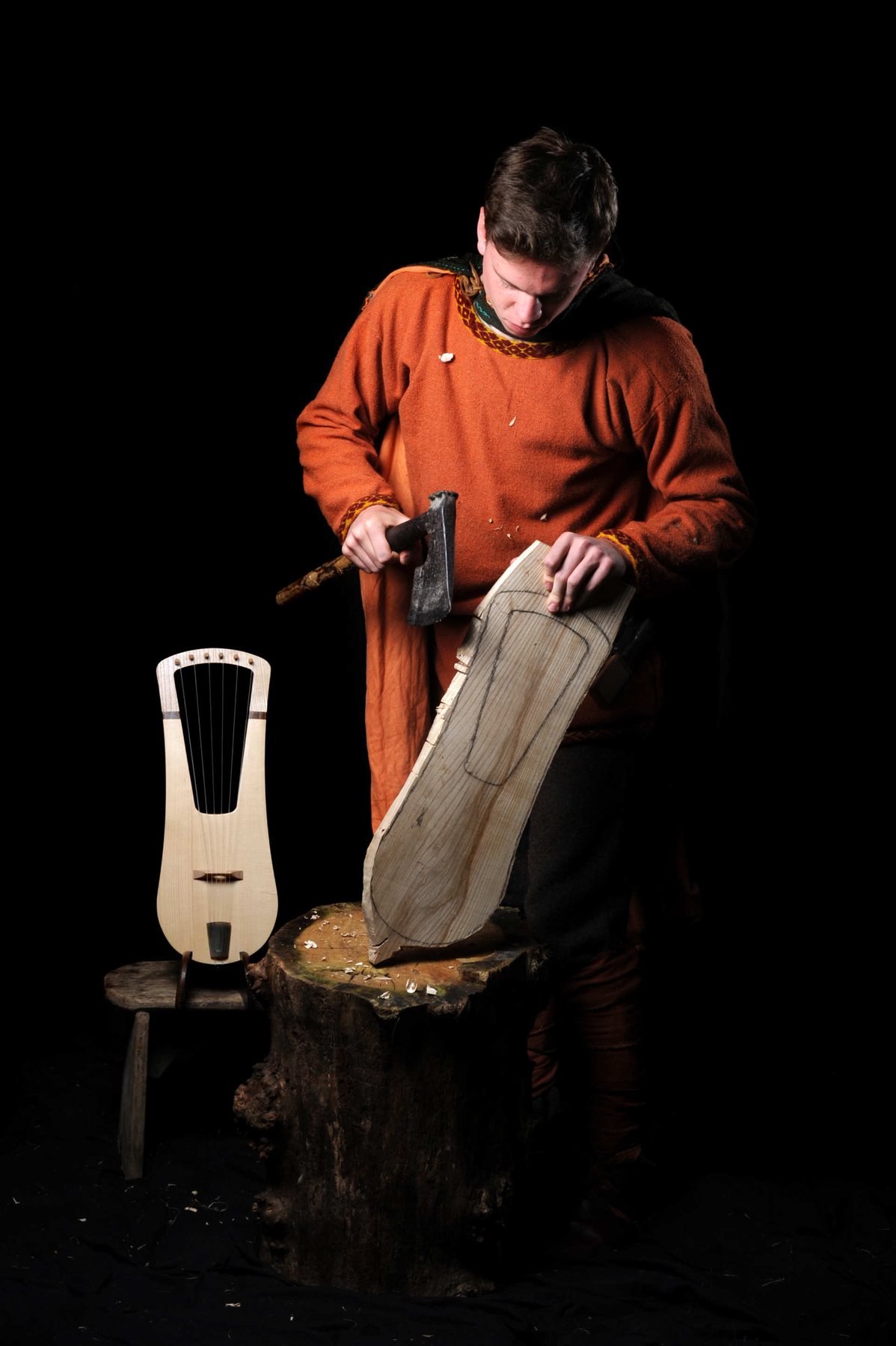
We reconstructed the instrument with tools based on archaeological sites of the same period, following our experimental archaeology protocol. The results were presented at the Musée d'Archéologie nationale.