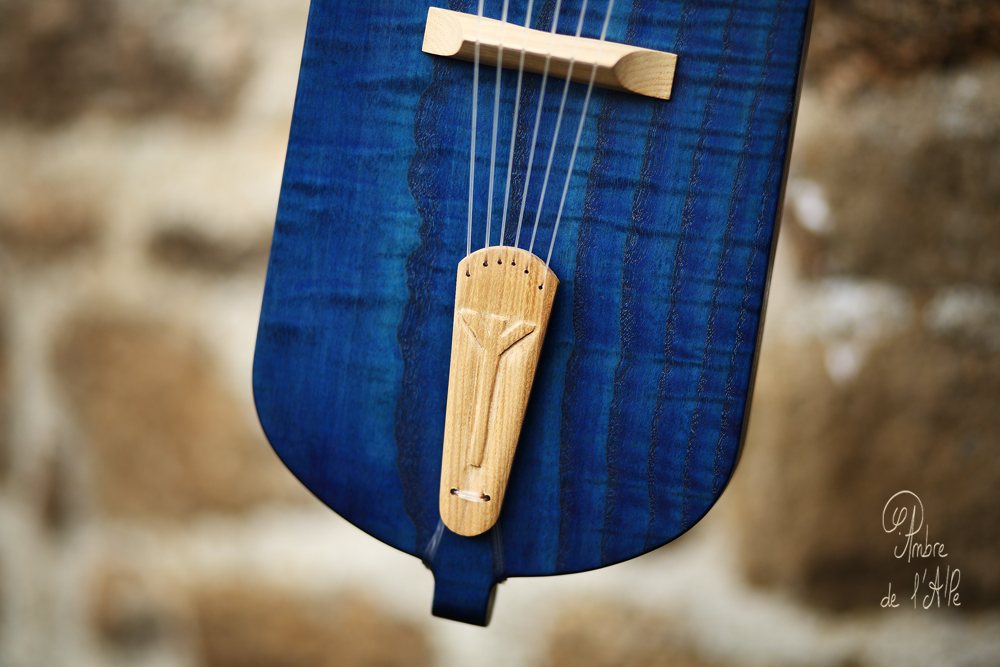
© Please note: this instrument may be protected by copyright; its reproduction may be restricted or prohibited. Please see our copyright rules.
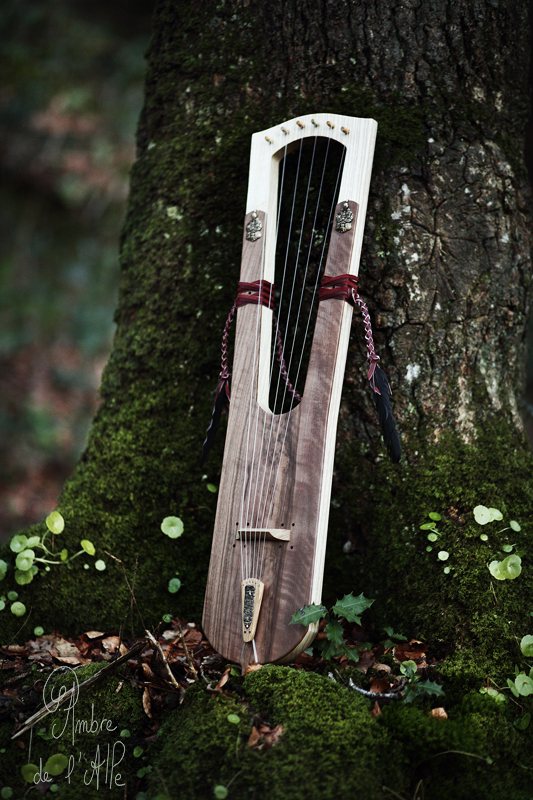
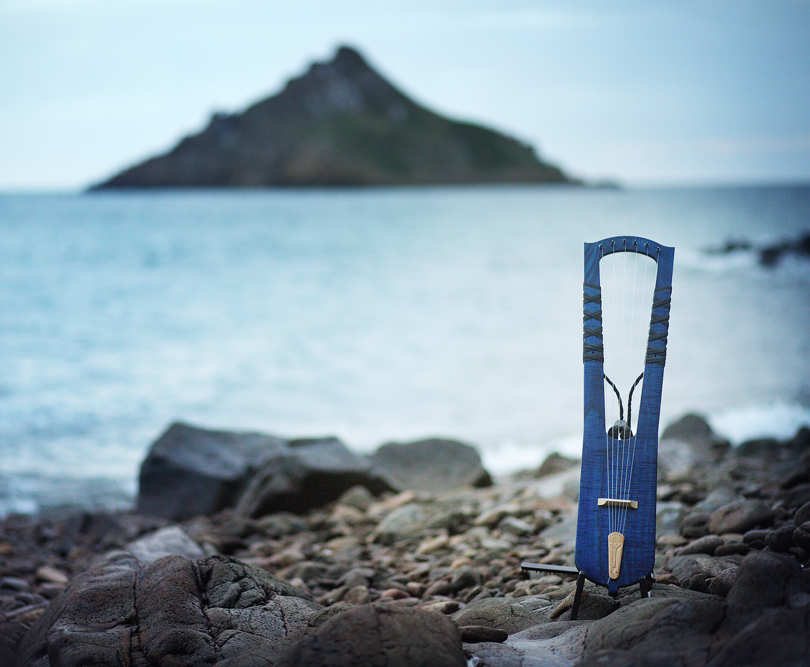
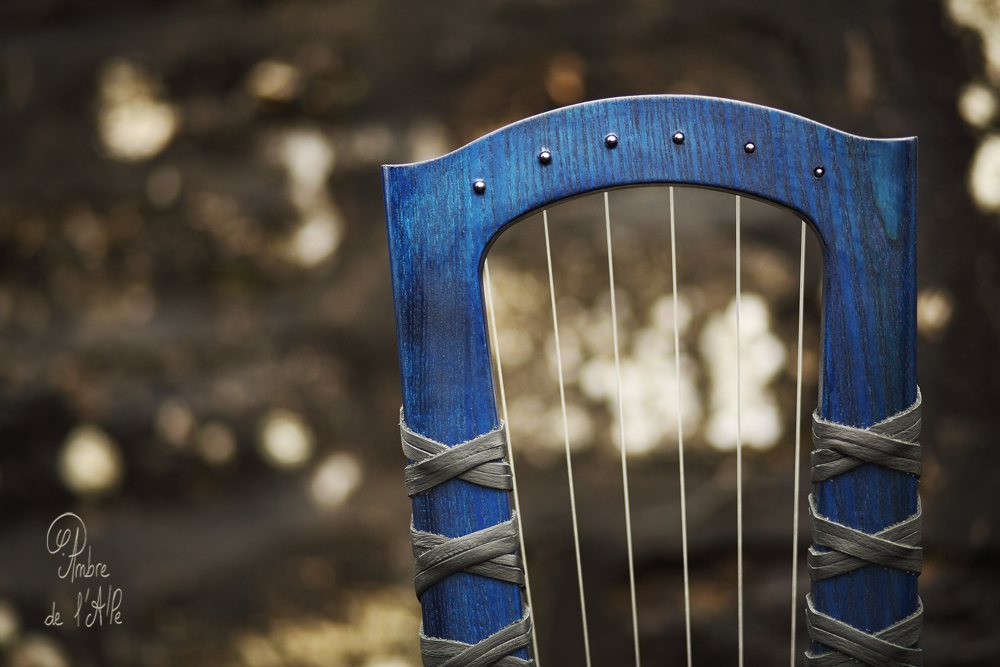
Trossingen lyreBleu
Adapted historical instrument
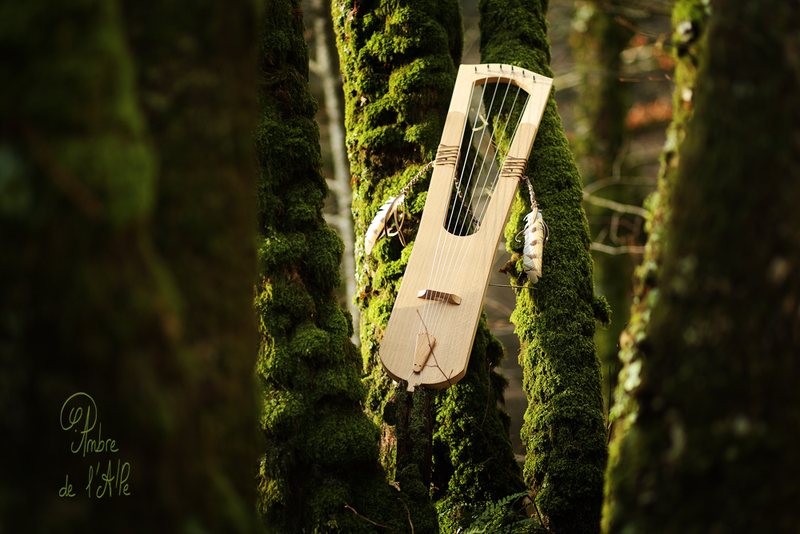
Made after an archaeological find, with the adaptations requested by the musician.
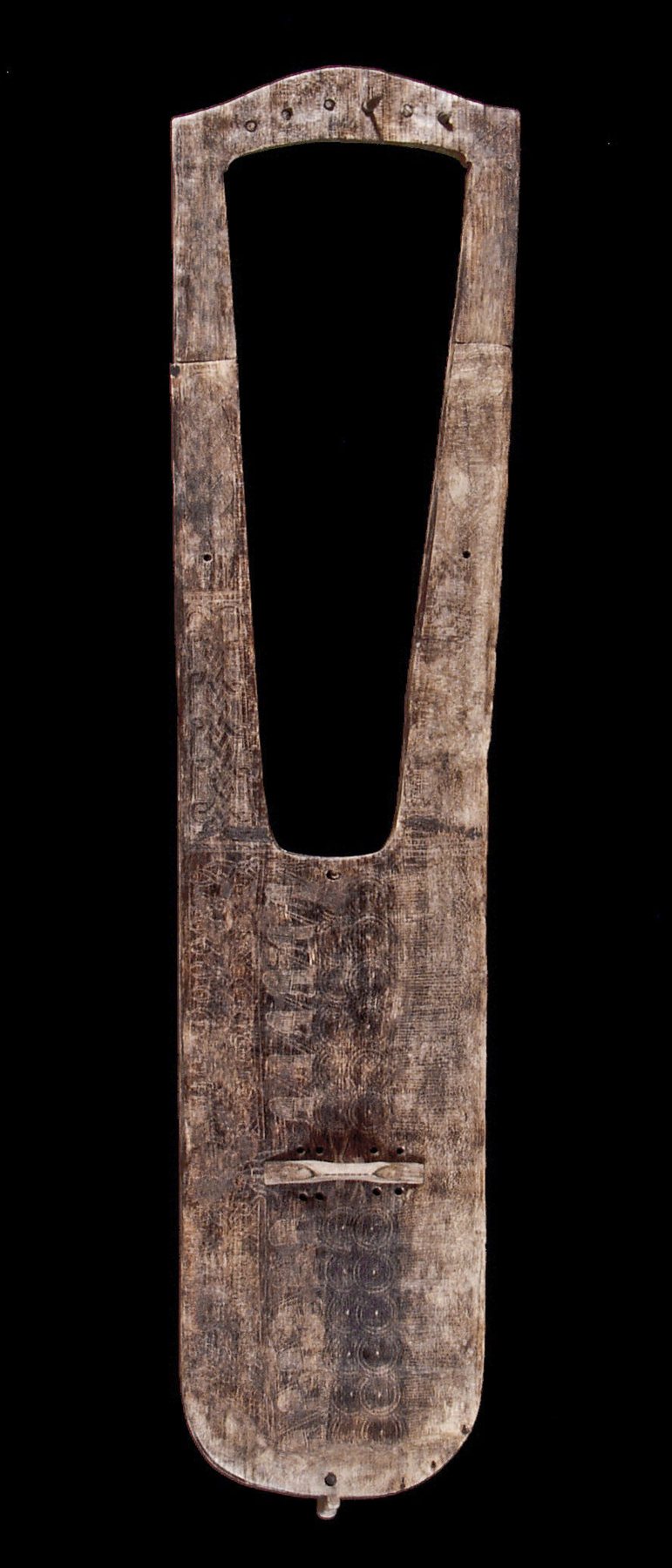
Model: Trossingen lyre (6th century)
Collection: Bifrost
Specifications
- Body
- Figured ash
- Soundboard
- Figured ash
- Tuning pegs
- Metal
- Tailpiece
- Ash
- Bridge
- Olive ash
- Strings
- Nylon
- Ornamentation
- Blue stain, rune carved on the tailpiece, leather lashing
- Accessories
- Wooden case
Request a quoteWatch the video
Every instrument is made to order: woods, ornaments, strings and pickup are adapted to the way you play.
History and origins
Trossingen lyre · 6th century
Found in a warrior's grave in southern Germany, from the Merovingian period, this lyre is remarkably well preserved. Its body, carved from a single piece of maple, bears knife engravings highlighted with pigment: interlace on the arms, and two groups of warriors facing each other on the soundboard.
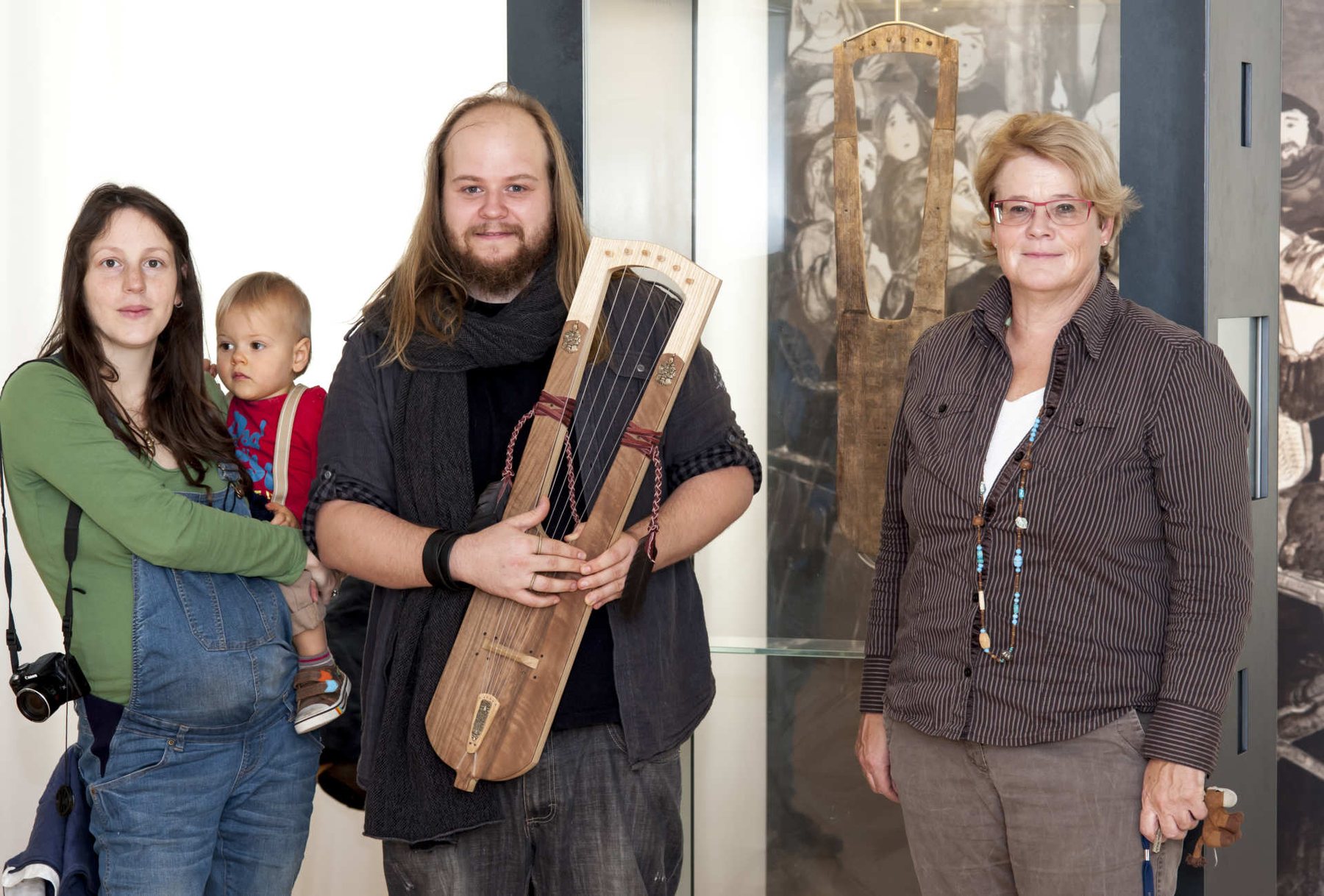
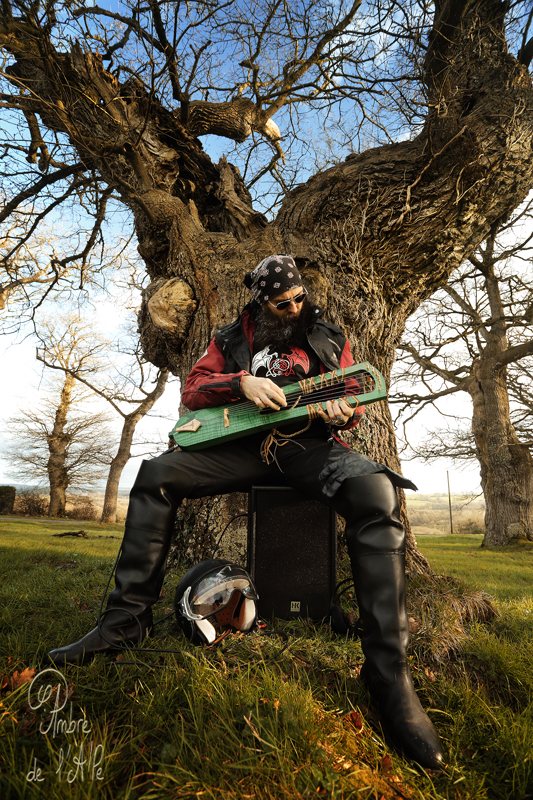
We studied it early on and have proposed several reconstructions, built with the tools of the period. It also gave rise to an electro-acoustic version.
Our work on the Merovingian lyres of Trossingen, Oberflacht and Cologne has been presented in lectures and exhibitions, notably at the Musée d'Archéologie nationale, the museum of Saint-Dizier and the archaeological museum of Konstanz.