© Please note: this instrument may be protected by copyright; its reproduction may be restricted or prohibited. Please see our copyright rules.
Sutton Hoo lyreSpéciale
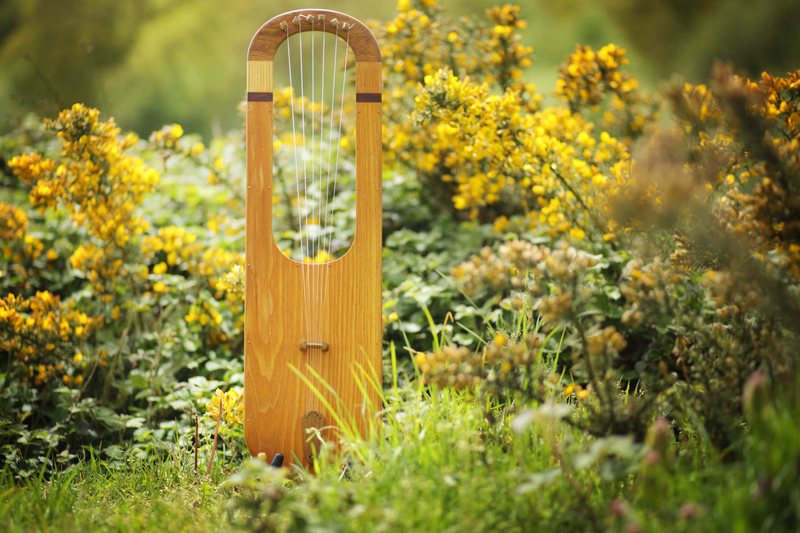
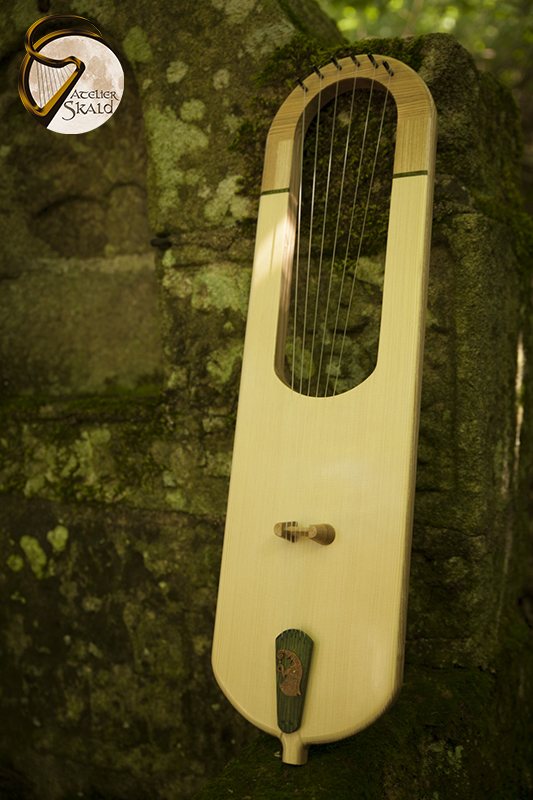
Adapted historical instrument
Made after an archaeological find, with the adaptations requested by the musician.
Model: Sutton Hoo lyre (7th century)
Specifications
- Body
- Ash
- Soundboard
- Spruce
- Tuning pegs
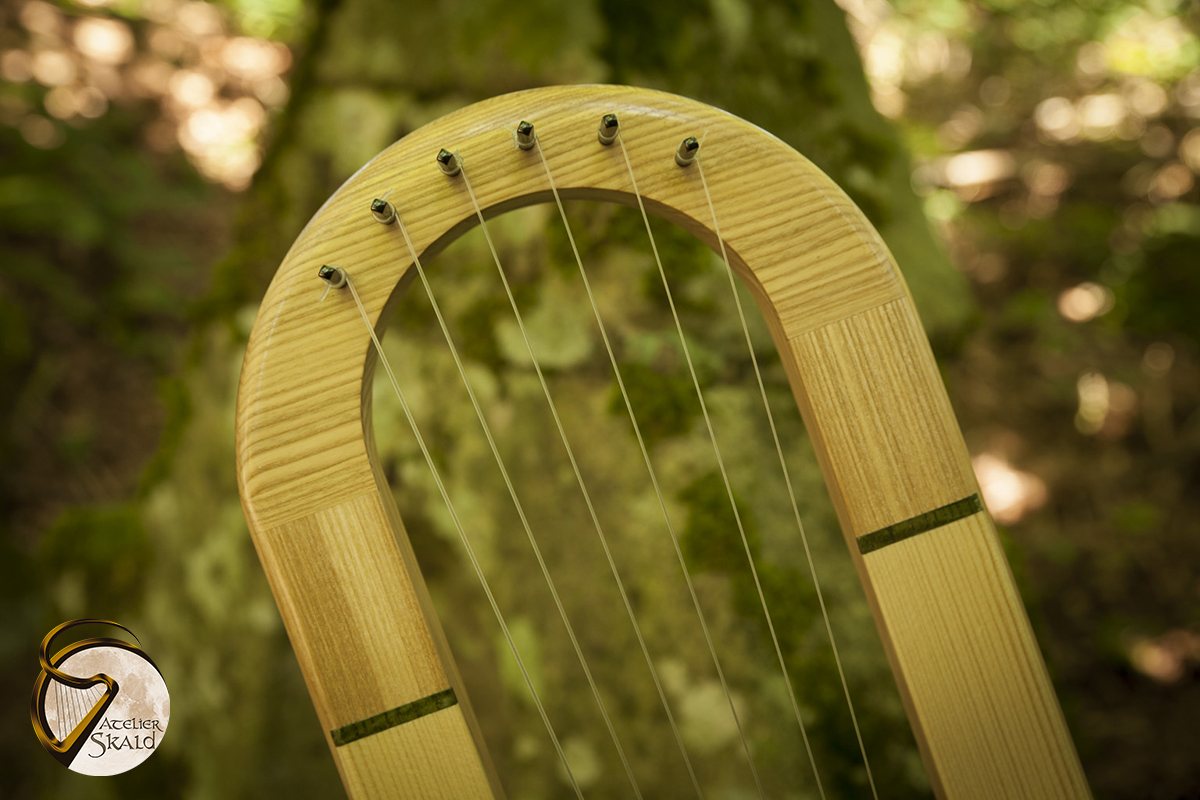
- Metal
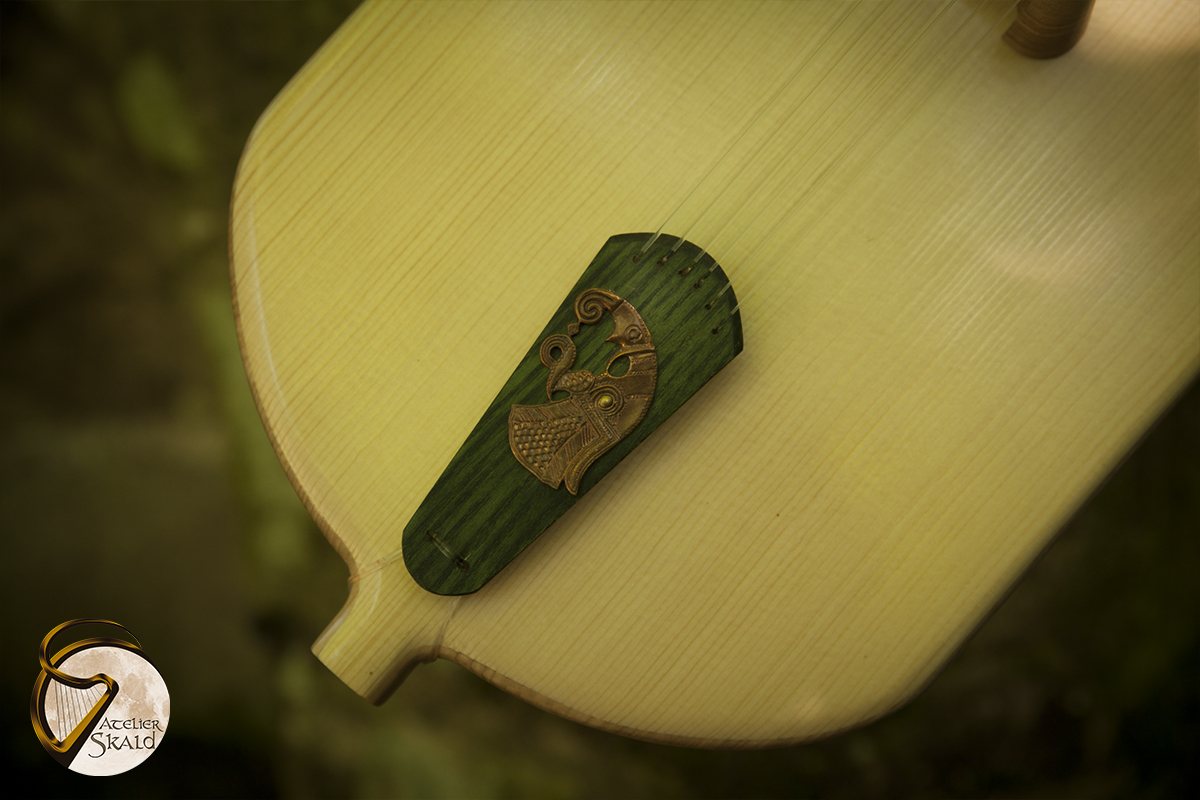
- Tailpiece
- Green-stained ash with a bronze bird appliqué (after the original Sutton Hoo appliqué)
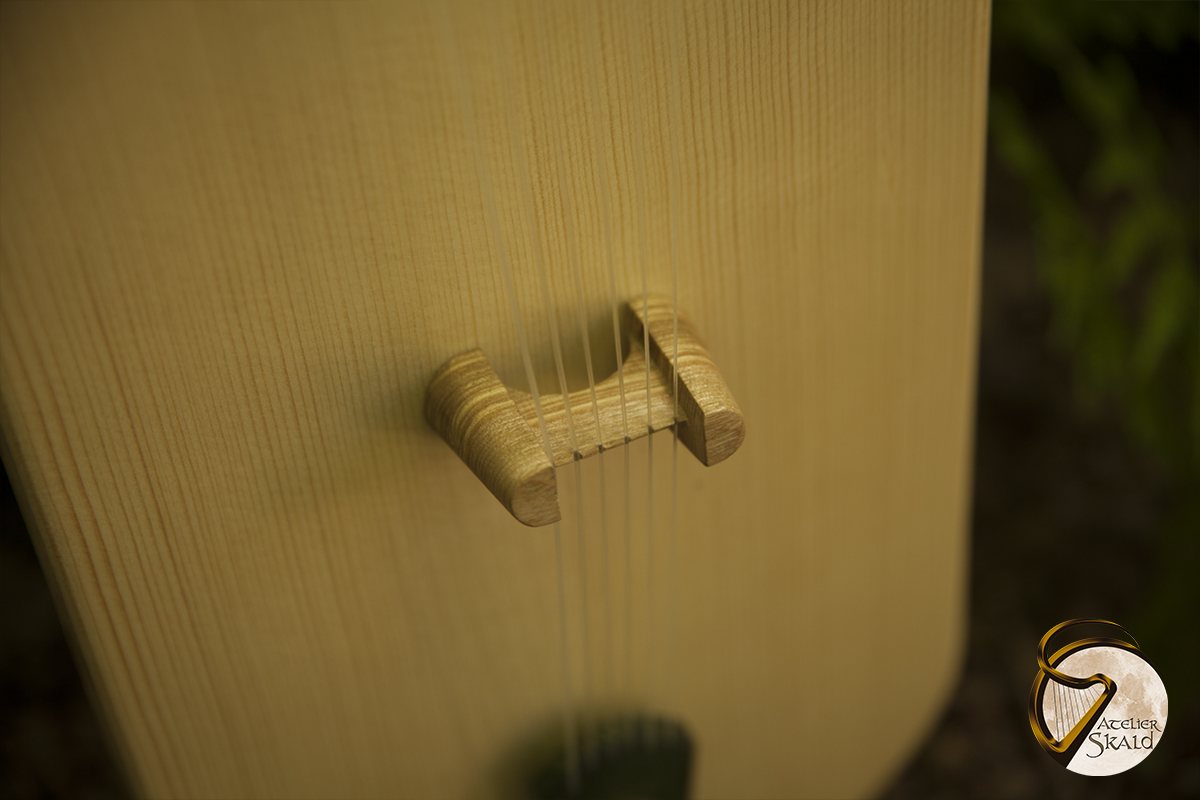
- Bridge
- Olive ash
- Strings
- Nylon or gut
- Ornamentation
- Green-stained ash strips between the yoke and the soundboard
Request a quoteWatch the video
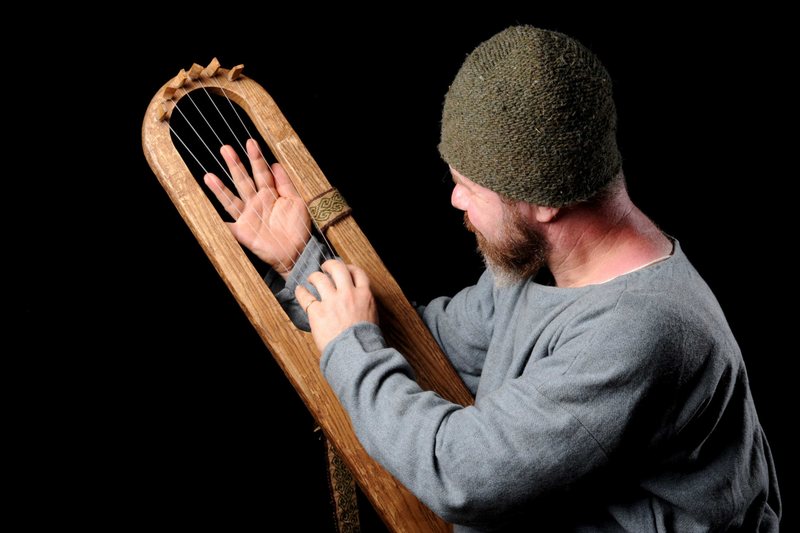
Every instrument is made to order: woods, ornaments, strings and pickup are adapted to the way you play.
History and origins
Sutton Hoo lyre · 7th century
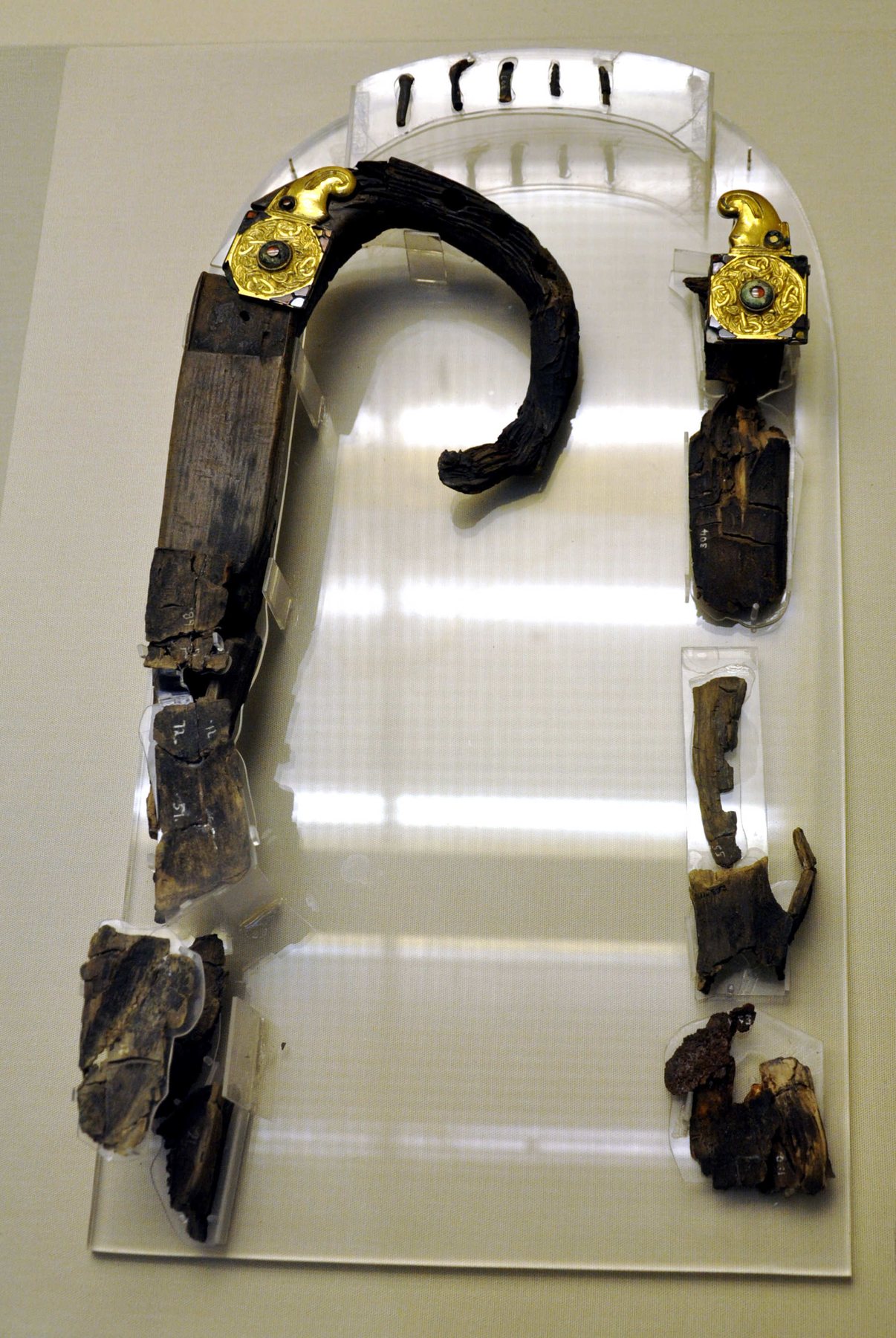
In 1939, the archaeologist Basil Brown excavated Mound 1 at Sutton Hoo, in England, and uncovered an untouched ship burial, perhaps that of King Raedwald of East Anglia, who died around 624. Among the objects: a helmet decorated with gold and garnets, weapons, and the remains of a maple lyre adorned with gold appliqués in the shape of birds.
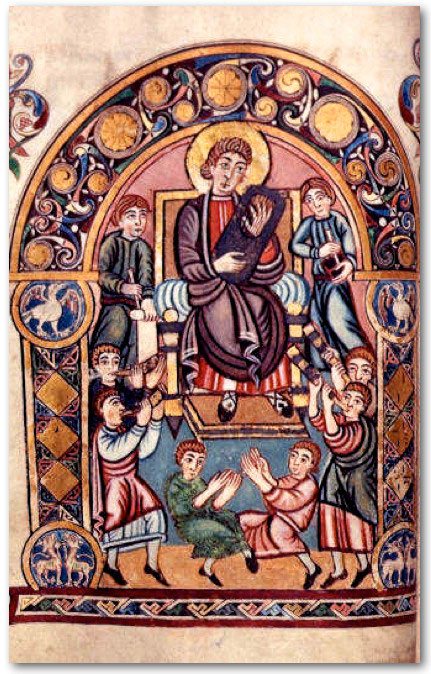
The study of depictions of the lyre in Britain, between the 7th and 9th centuries, sheds light on what the find leaves in shadow: how the instrument was made, its place in society and how it was played. The Vespasian Psalter, kept at the British Library, shows King David playing a lyre of the same shape.