© Please note: this instrument may be protected by copyright; its reproduction may be restricted or prohibited. Please see our copyright rules.
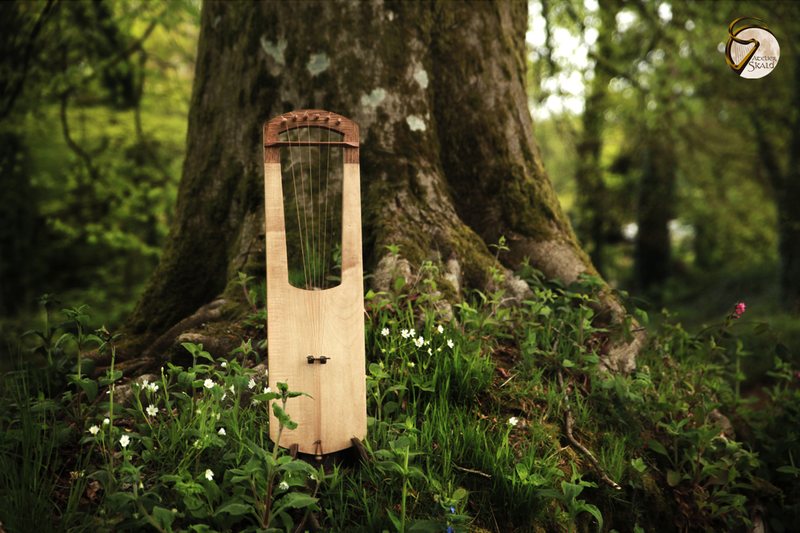
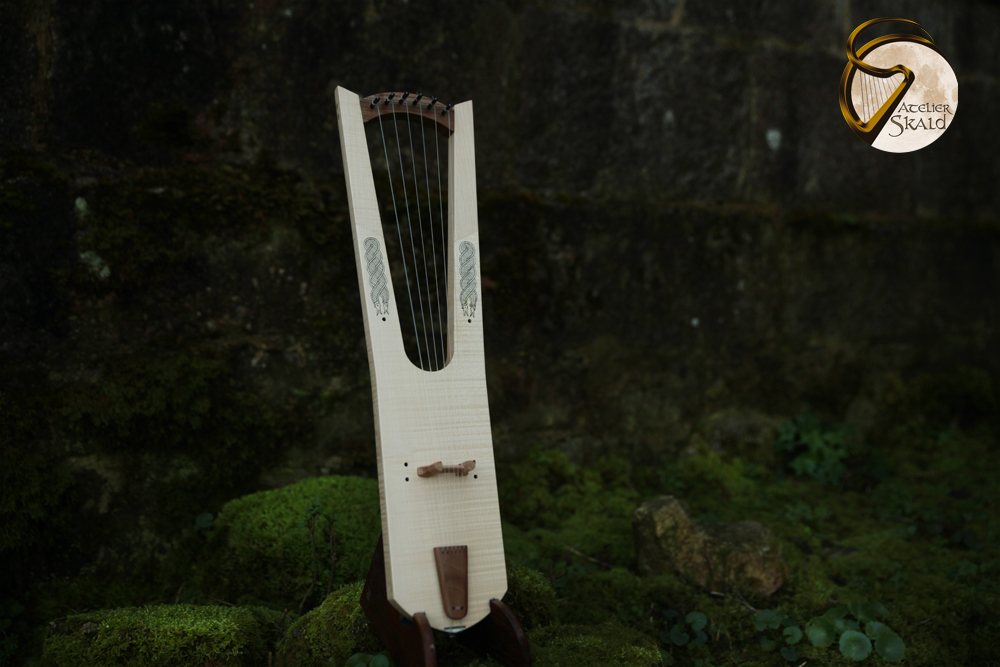
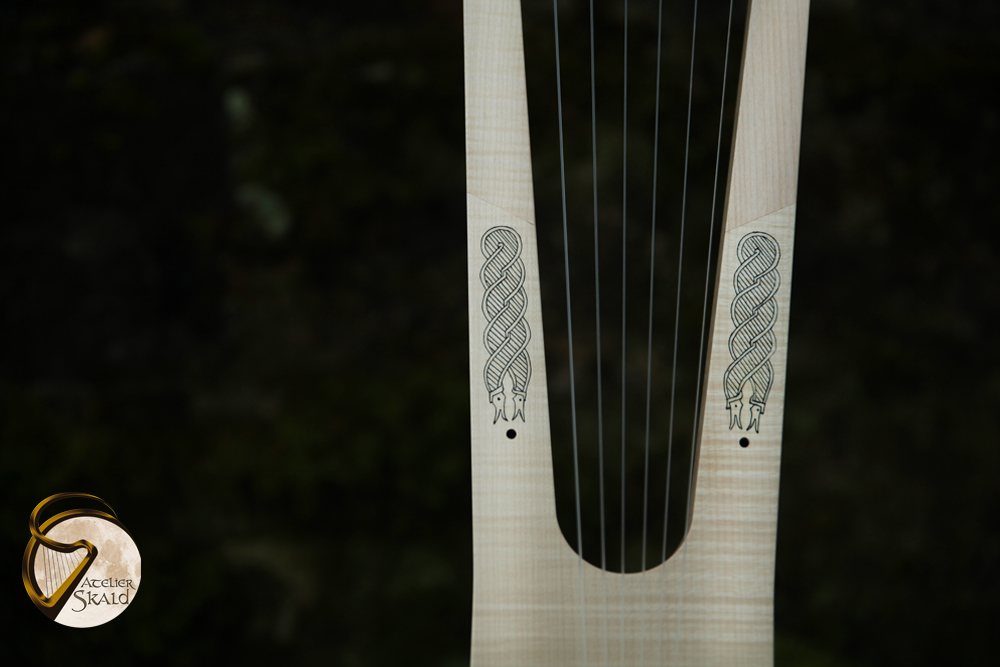
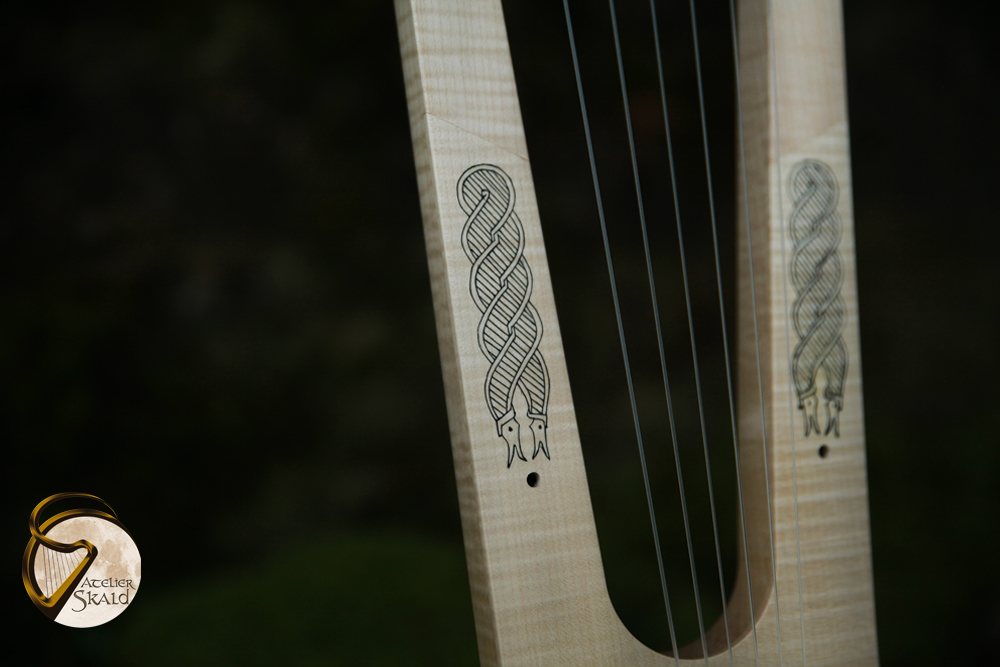
Oberflacht lyreSerpent
Adapted historical instrument
Made after an archaeological find, with the adaptations requested by the musician.
Model: Oberflacht lyre (Early Middle Ages)
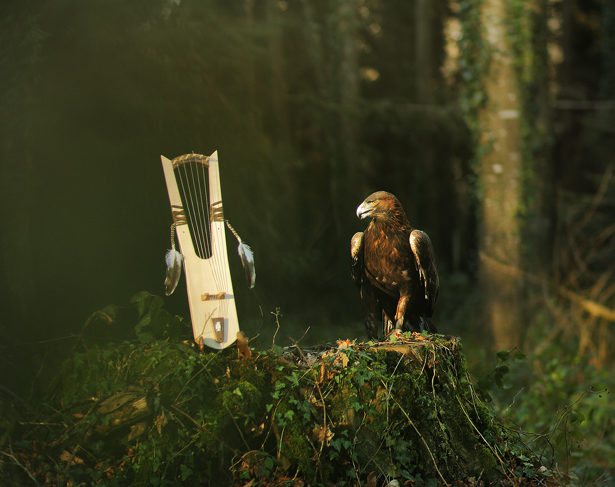
Collection: Animal Spirit
Specifications
- Body
- Maple
- Soundboard
- Maple
- Back
- Maple
- Yoke
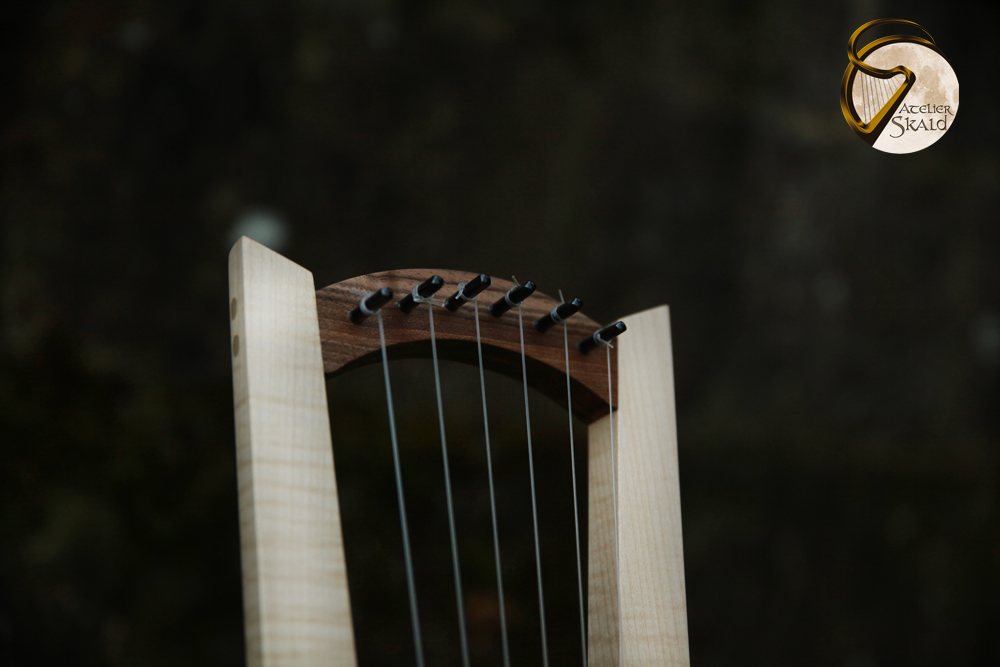
- Walnut
- Tuning pegs
- Metal
- Tailpiece
- Walnut
- Bridge
- Olive ash
- Strings
- Nylon
- Finish
- Natural
- Ornamentation
- Engravings with pigment inlay; serpent motif
Request a quoteWatch the video
Every instrument is made to order: woods, ornaments, strings and pickup are adapted to the way you play.
History and origins
Oberflacht lyre · Early Middle Ages
Excavated several times between 1846 and 1934, the cemetery of Oberflacht, in southern Germany, yielded some 300 graves and a group of wooden objects without equal. Two lyres came from the richest graves. They were lost during the Second World War, together with the wing of the Berlin museum that held them.
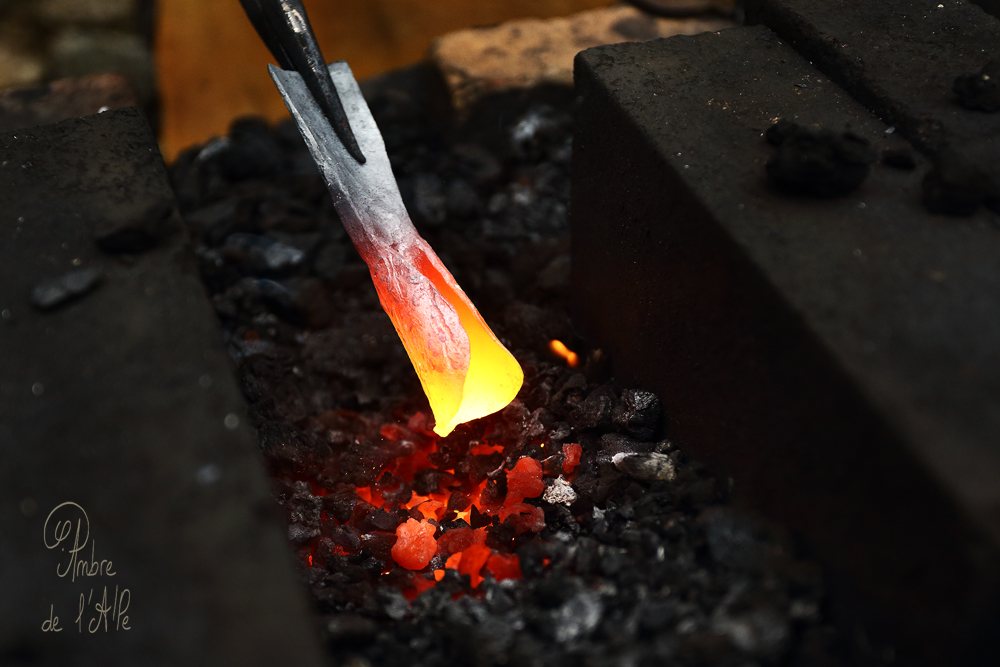
To reconstruct the instrument, we rely on the sketches and drawings of the archaeologist who excavated the graves, and on a palynological study of the peat bogs of the region, which tells us which trees grew there at the time. We reforged a tool kit after pieces found on sites contemporary with the lyre: gouges, chisels, drawknife, knife.
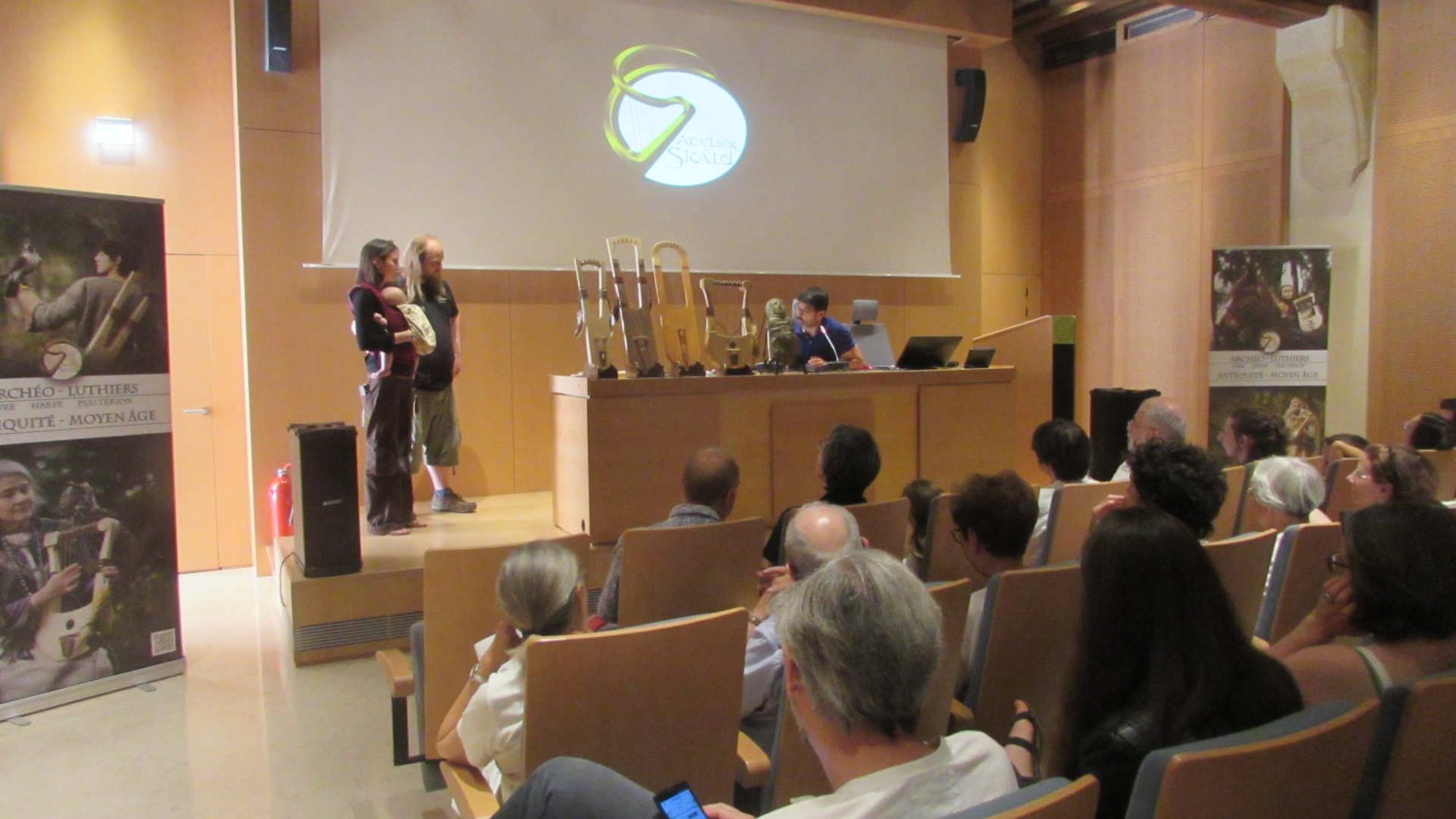
This experimental archaeology protocol, developed within the PRIAE, was presented in a lecture at the auditorium of the Musée d'Archéologie nationale, in Saint-Germain-en-Laye.